
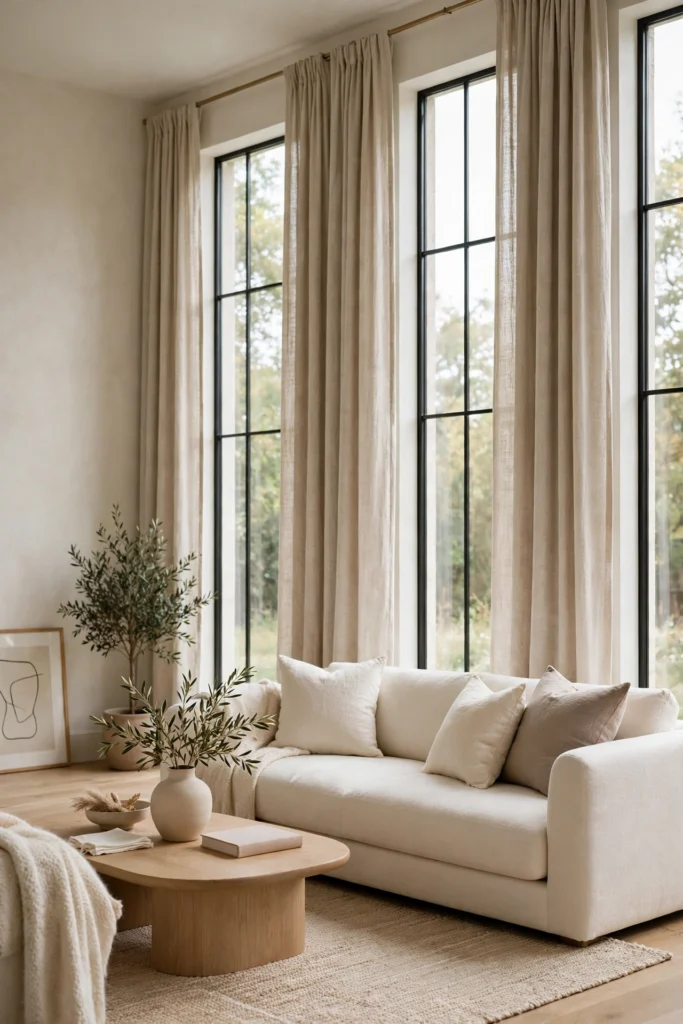
Curtains are one of the most powerful — and most underestimated — tools in home decor. The right curtains make a room look taller, wider, warmer, and more finished. The wrong ones make it look small, dark, and dated.
The good news: getting curtains right is mostly about a few simple rules, not about spending a lot of money. Here are eight ideas that work in living rooms and bedrooms alike.
1. Hang them high — almost to the ceiling
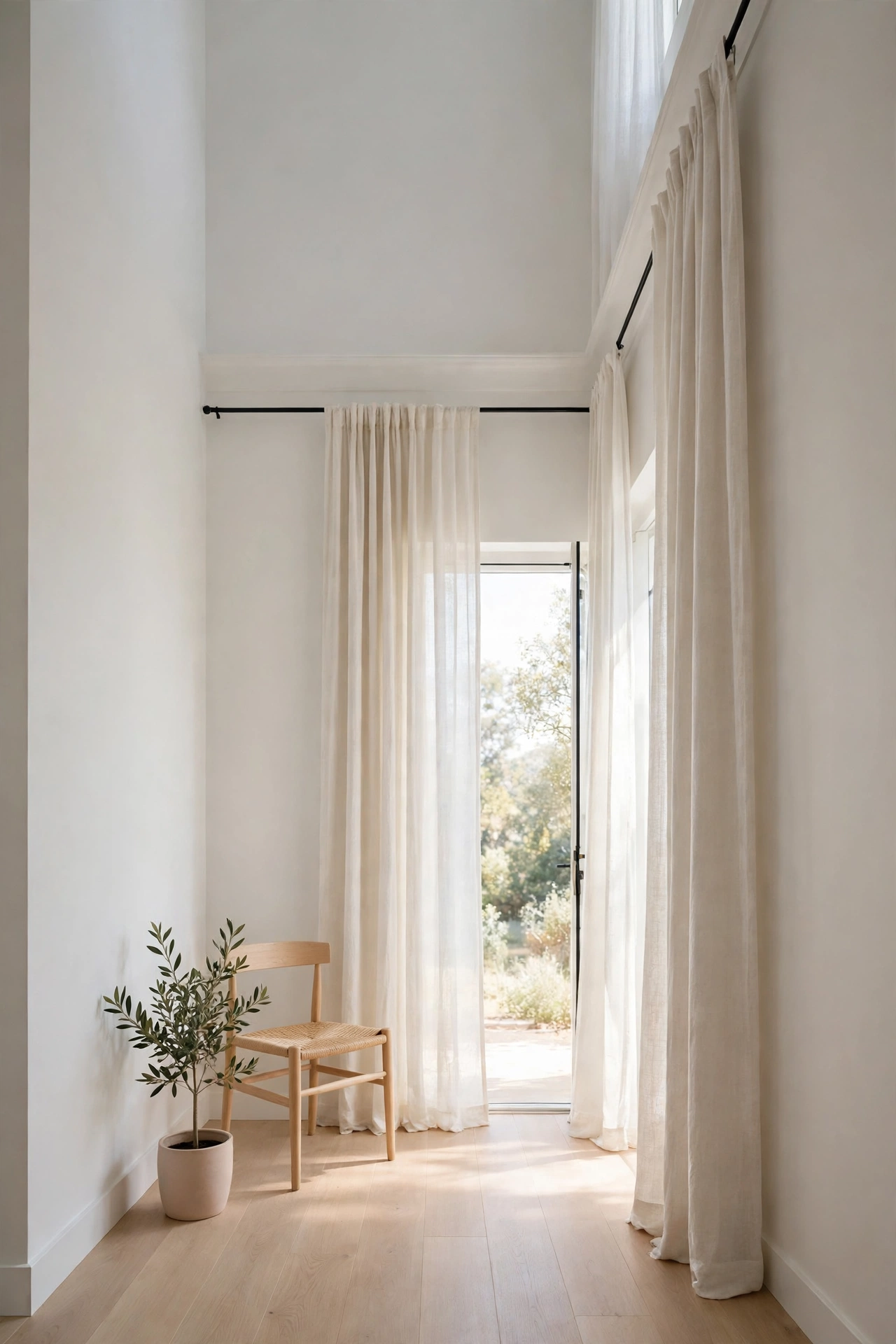
This is the number one designer trick, and it costs nothing. Mount your curtain rod 10–15 cm below the ceiling (or right at the ceiling) instead of just above the window frame. The eye follows the curtain all the way up, and the room instantly feels taller. It works in every room, with every kind of curtain.
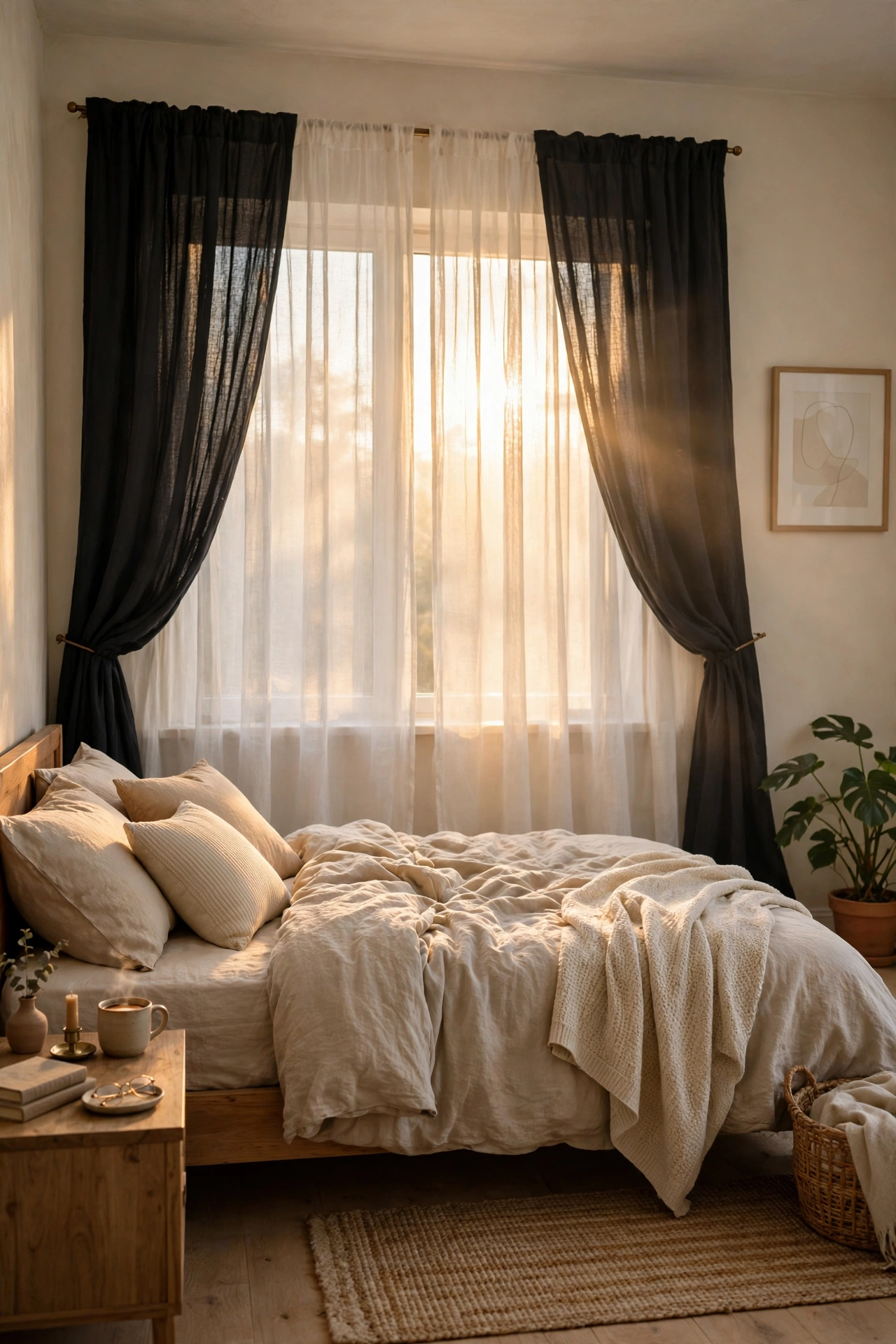
2. Go wider than the window
Extend the rod 15–25 cm past the window frame on each side, so the curtains stack on the wall rather than covering the glass. More glass shows, more light comes in, and the window looks much bigger than it is. When the curtains are open, they frame the window instead of hiding it.

3. Let them kiss the floor
Curtains that stop at the windowsill look unfinished; curtains that pool dramatically on the floor are hard to keep clean. The sweet spot is floor-length curtains that just touch the floor — or “kiss” it. Measure from the rod to the floor and buy the closest length; a centimetre or two long is better than too short.
4. Choose linen-look fabric for a soft feel
Heavy, shiny fabrics can make a room feel formal and dark. Linen-look curtains — real linen or a linen-blend — filter light beautifully, drape softly, and suit almost every style. In a bedroom they feel calm and relaxed; in a living room they feel warm and lived-in. Choose a warm white, cream, or soft beige for the most versatile look.
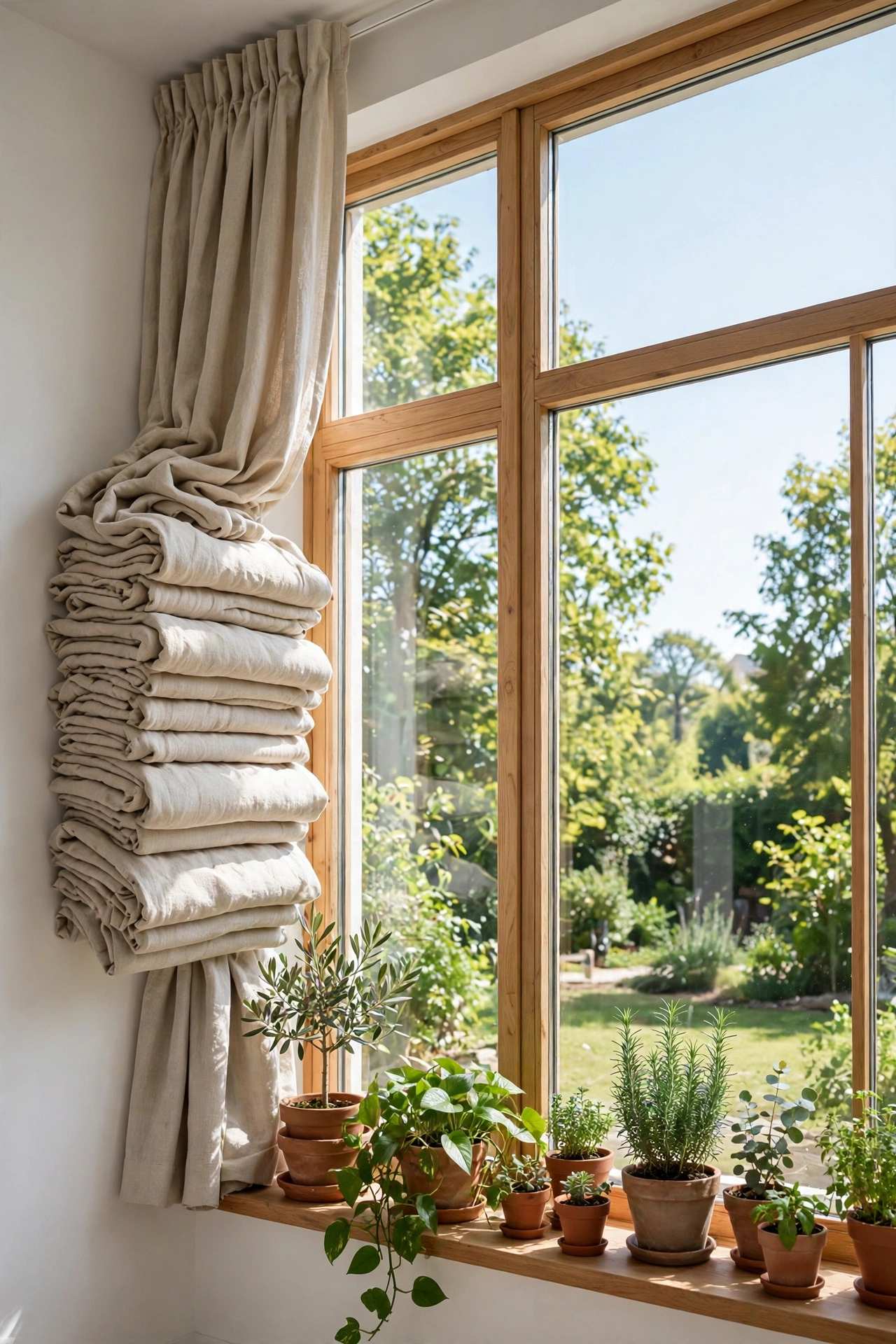
5. Layer sheers with heavier curtains
Two layers give you the best of both worlds: sheer curtains for daytime privacy and soft, diffused light, and heavier curtains for warmth, darkness, and a finished look at night. Use a double rod or two separate rods. In a bedroom, swap the sheer layer for blackout curtains if you need deep sleep.
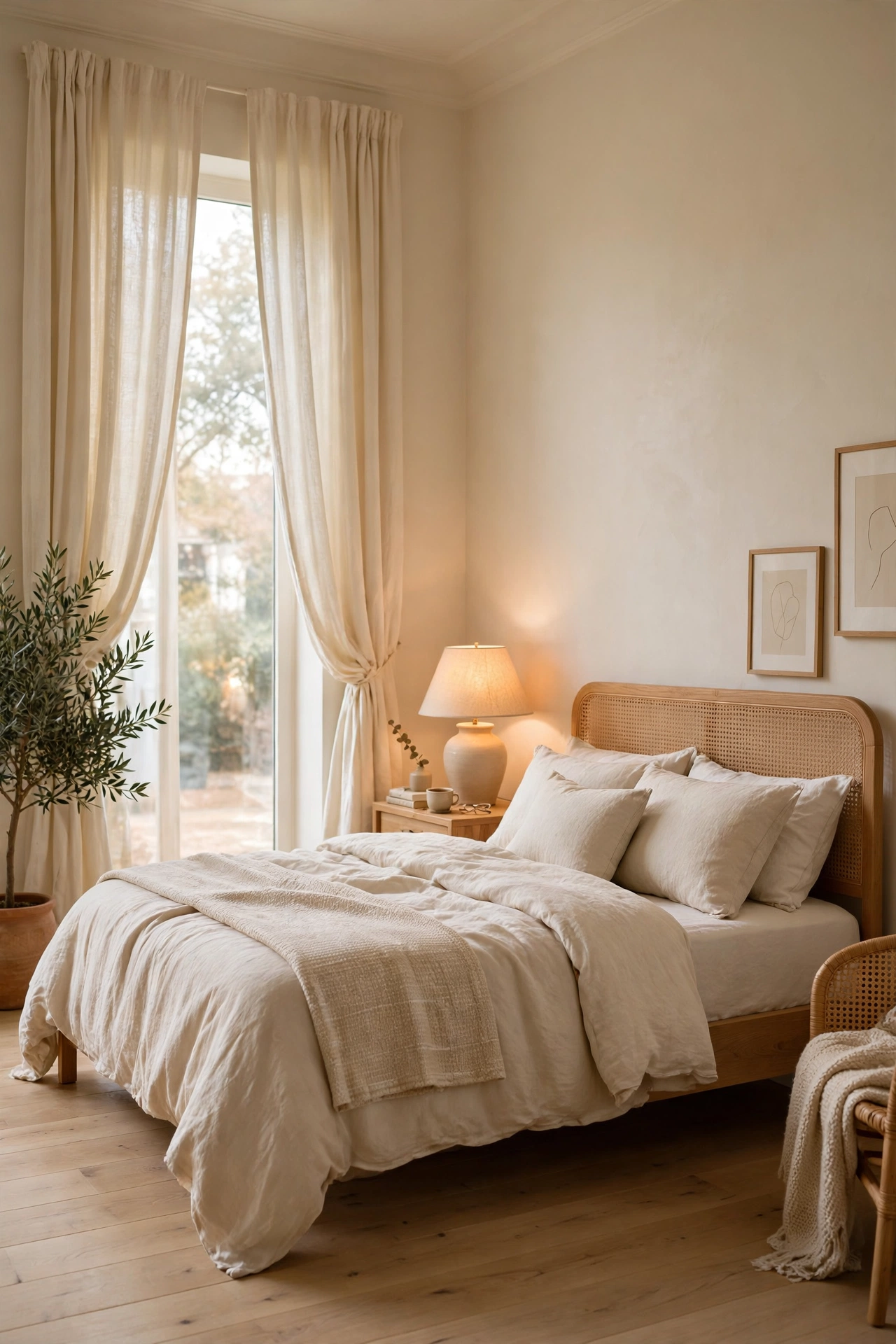
6. Match the colour to the walls
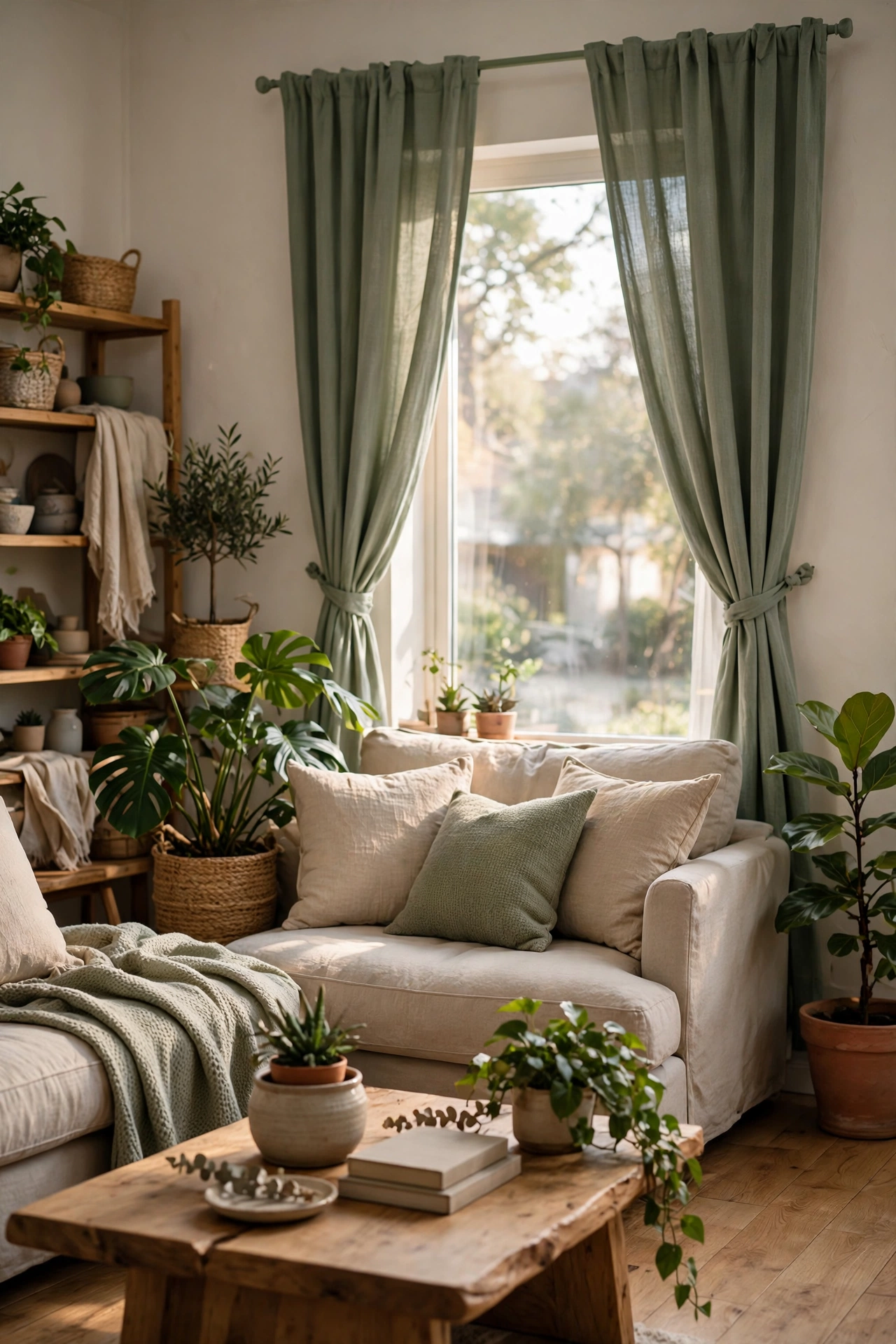
Curtains in a colour close to your wall colour make a room feel bigger, because the eye doesn’t stop at a strong contrast. Cream curtains on cream walls, soft sage on sage walls — the room reads as one calm, continuous space. If you want a statement, use a deeper tone in the same colour family rather than a completely different colour.
7. Add tiebacks for a tailored look
Tiebacks do two jobs: they hold curtains neatly to the sides during the day, letting in maximum light, and they add a finished, tailored detail. Simple fabric tiebacks, a leather strap, or a brass hook all work. Avoid fussy tassels unless your room is very traditional — simple is almost always better.
8. Don’t forget the hardware
The rod and rings are part of the look. A slim matte-black rod suits modern rooms, warm brass suits classic and cozy rooms, and wood suits rustic spaces. Choose rings or clips that slide easily — curtains you dread opening are curtains that stay closed, and closed curtains make a room feel smaller.
Conclusion
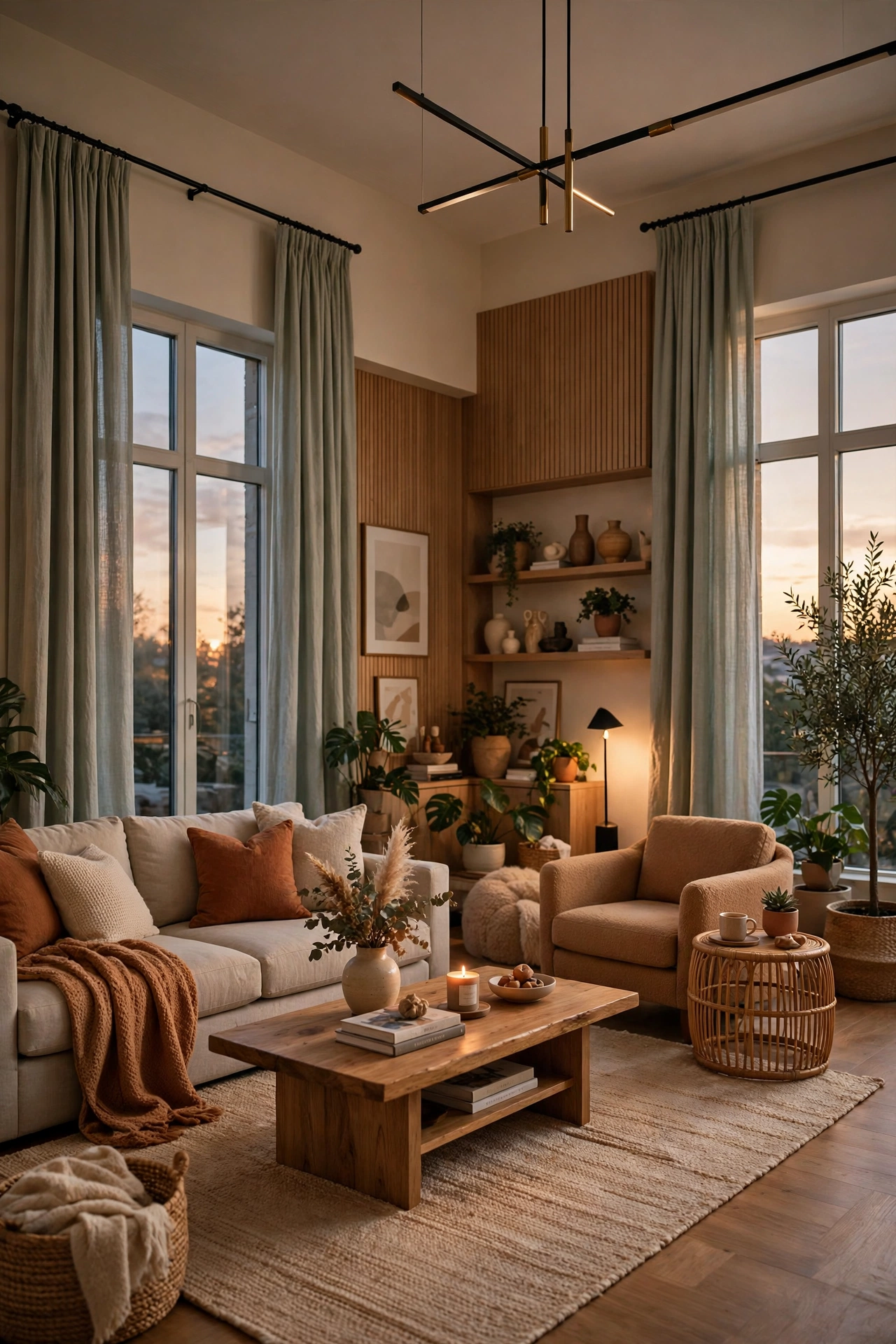
Curtains can change a room more than almost any other single item — and the biggest improvements cost nothing at all. Hang them high, go wider than the window, let them touch the floor, and choose a soft fabric in a colour close to your walls. Try it on one window this weekend and see how much bigger and cozier the room feels.