
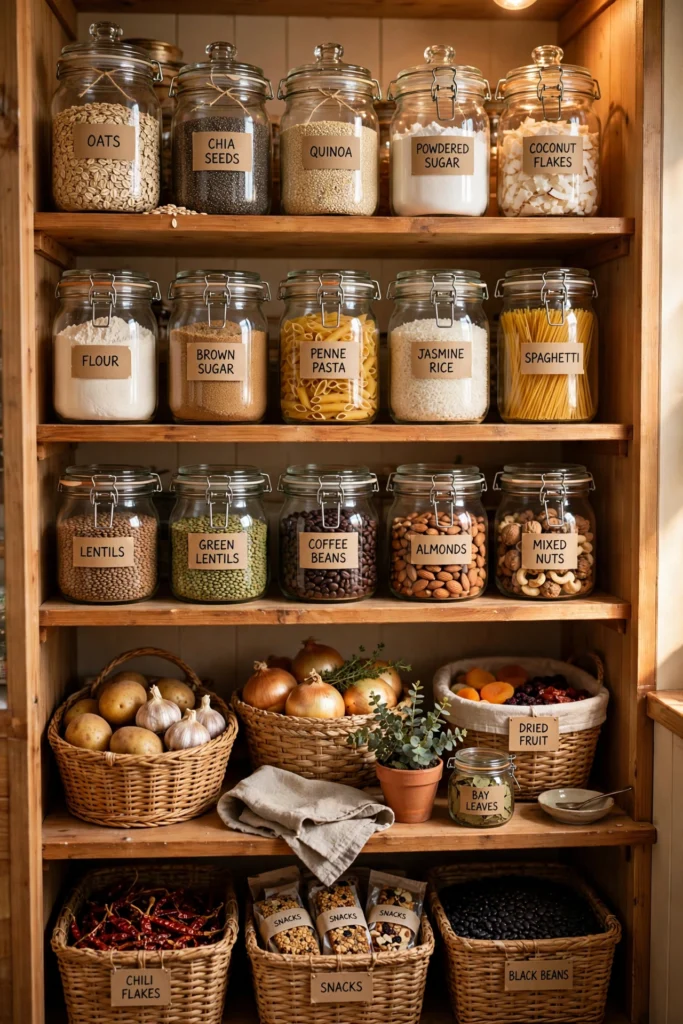
You do not need a bigger kitchen. You need a pantry that works. When the pantry is a jumble of half-open packets, mystery jars and things pushed to the back, cooking feels stressful and the kitchen feels small — because every cupboard is fighting you.
A well-organised pantry changes how the whole kitchen feels. You can see what you have, you stop buying duplicates, and cooking starts with calm instead of a hunt. These ten ideas need no renovation, just an afternoon and a few jars.
1. Empty it completely first
Before you organise anything, take everything out. Every jar, every packet, every tin. Wipe the shelves, check the dates, and throw away anything stale or long forgotten. You cannot organise a mess you cannot see, and most pantries hold a surprising amount of food nobody will ever eat. Start empty, and only put back what you actually use.
2. Group things into zones
A pantry works best in zones: breakfast in one place, baking in another, snacks together, tinned goods together. When everything has a zone, you always know where to look — and where to put things back. Put the zones you use daily at eye level, and the things you use rarely up high or down low.
3. Decant into clear jars
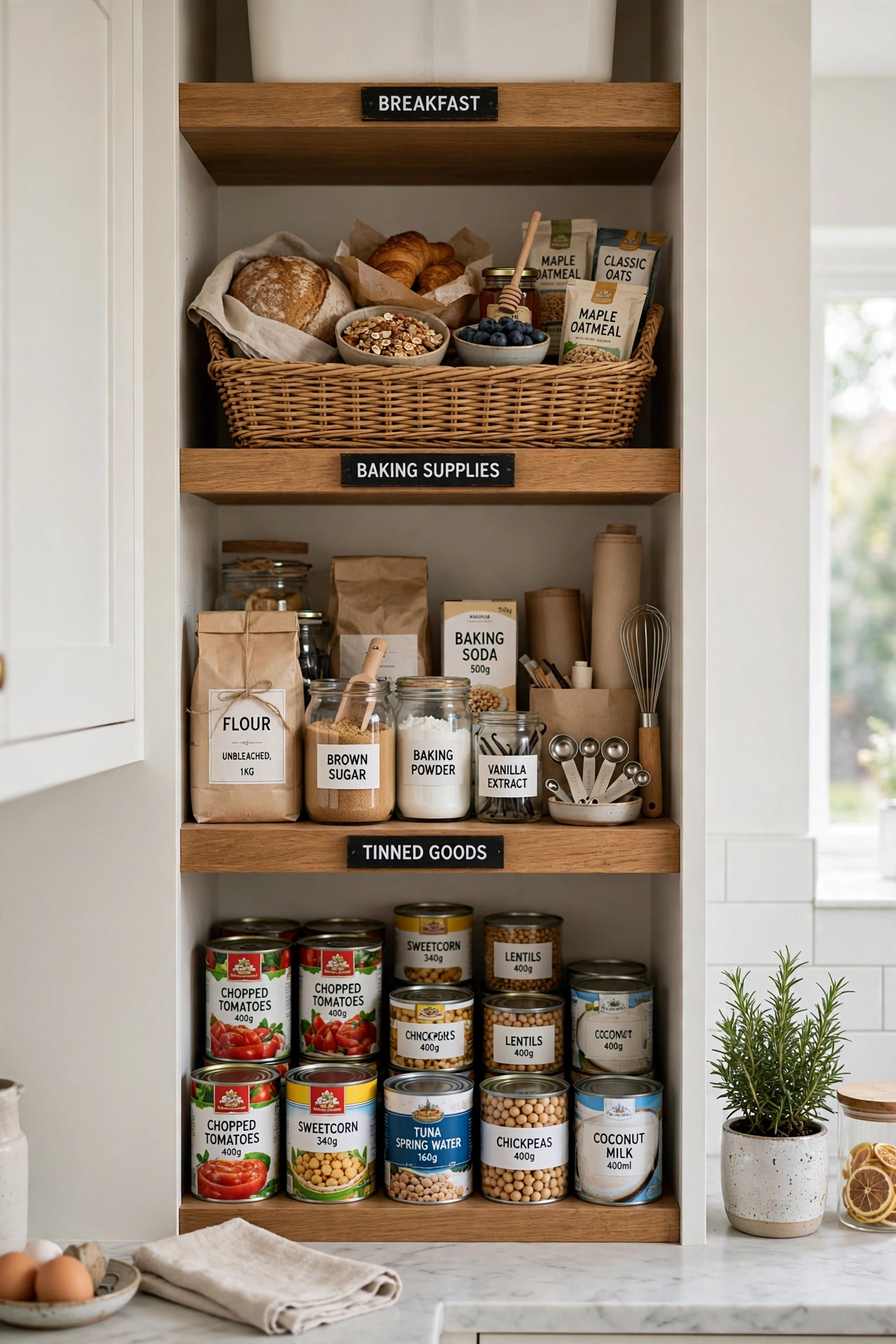
Mismatched packets are hard to see into and hard to stack. Pour rice, pasta, flour, oats and lentils into clear jars or airtight containers, and you can see at a glance what you have and how much is left. Glass jars look beautiful and keep food fresher; matching containers make even a small pantry look calm and intentional.
4. Label everything
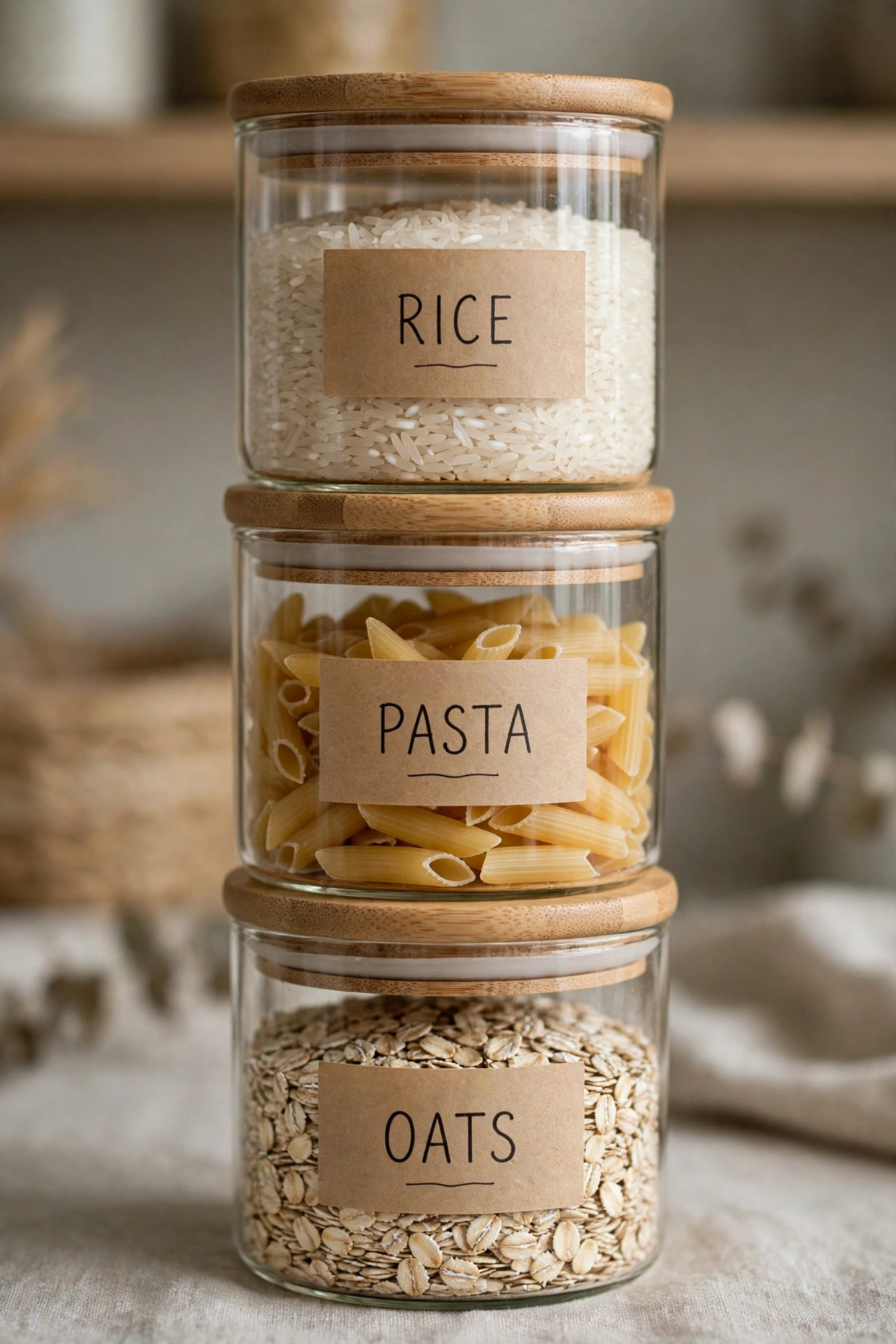
Labels are the difference between an organised pantry and a pantry that stays organised. Label jars with what is inside and the date you filled them, and label baskets and boxes with their zone. A label maker, a chalk pen or simple masking tape all work. When everyone in the house can see where things go, the system survives real life.
5. Use baskets to corral the small stuff
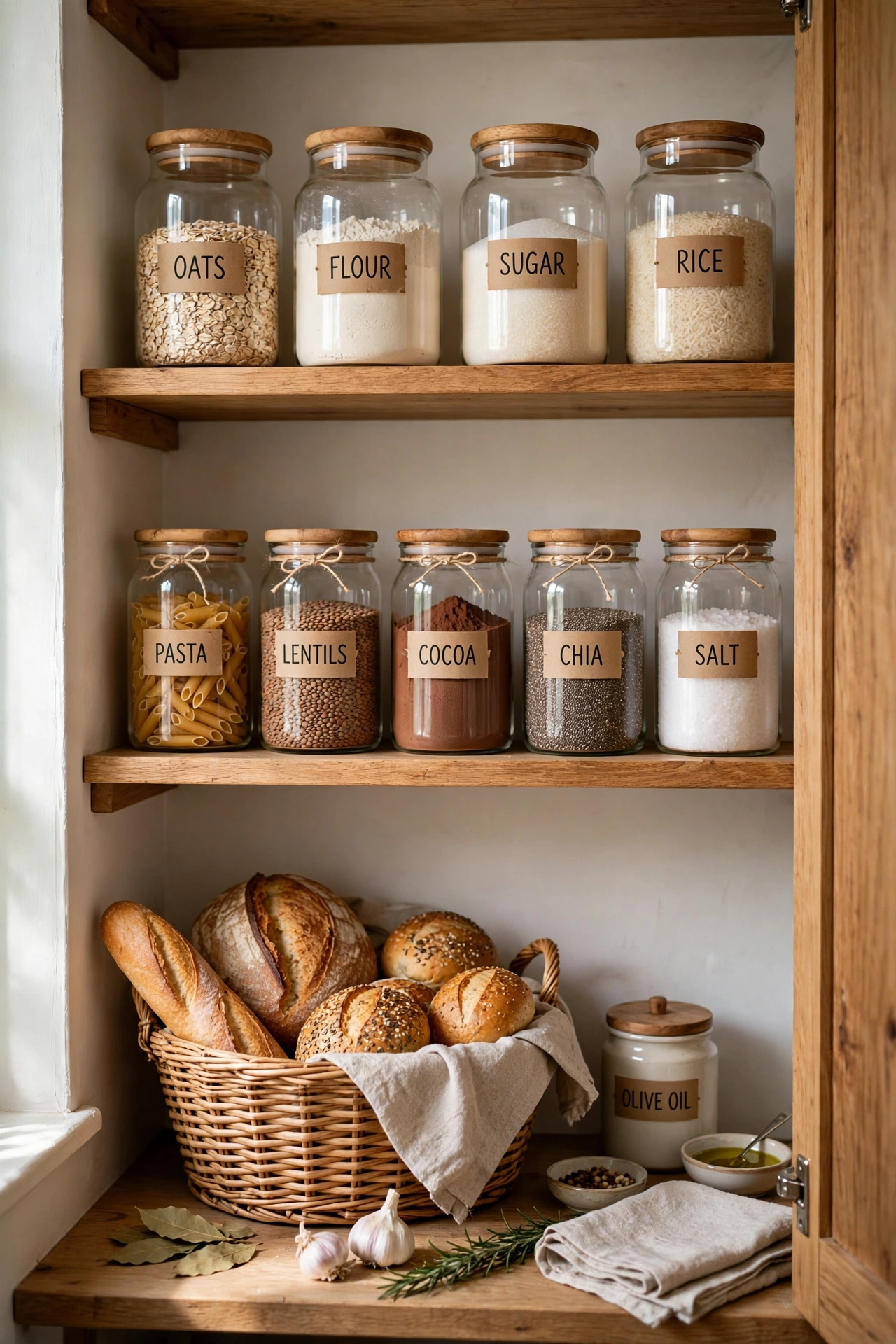
Small packets, spice sachets and snack bars disappear into corners. Group them in small baskets or boxes — one for snacks, one for baking, one for breakfast — and the pantry stops swallowing things. Pull the whole basket out, take what you need, and slide it back. It is the simplest habit in this whole list, and the one that saves the most time.
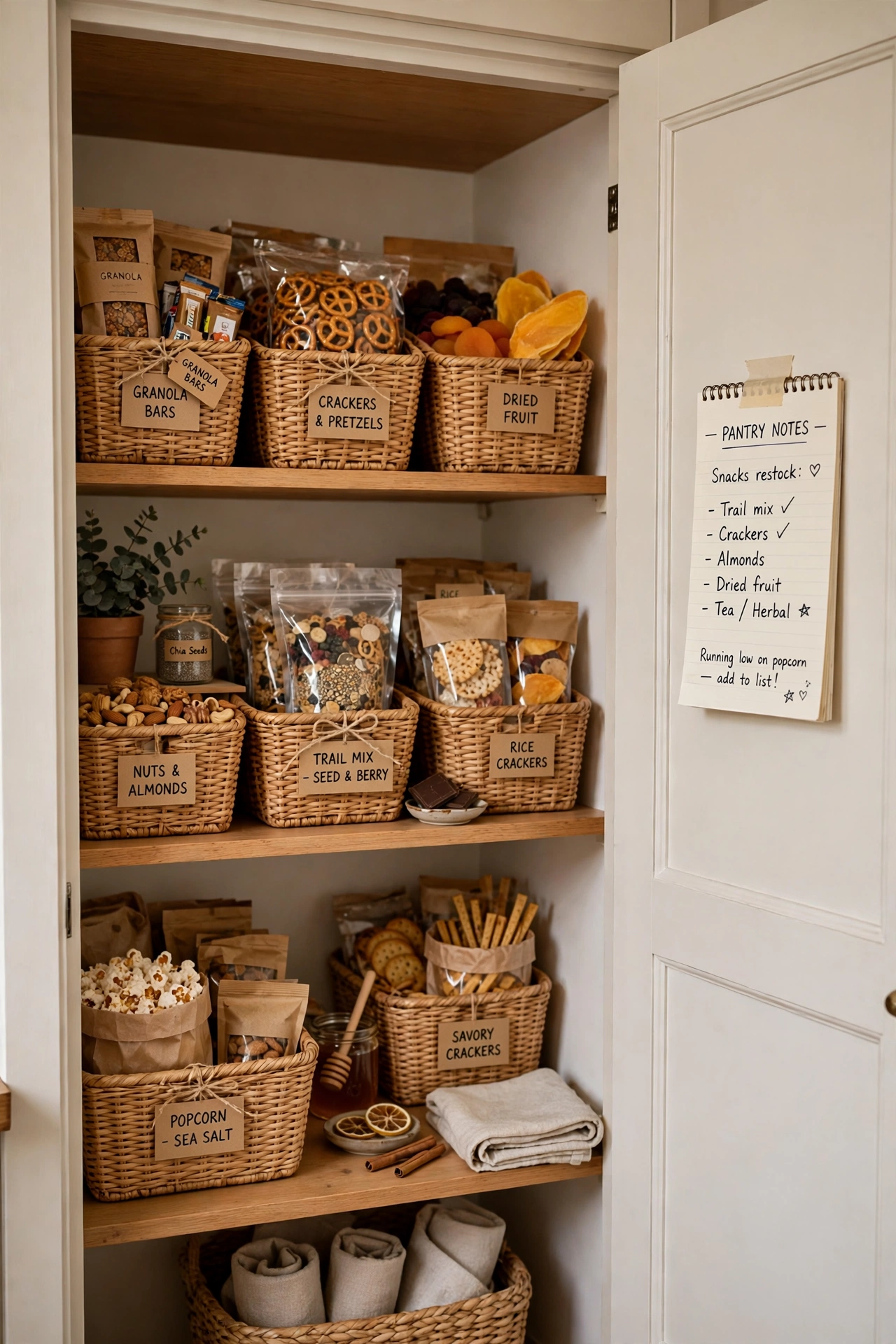
6. Add risers and turntables
Deep shelves hide things at the back. A small shelf riser doubles the usable space for tins and jars, and a turntable — a lazy Susan — in a corner means nothing gets lost behind anything else. One spin and you can see every spice, every sauce. These two cheap additions make a deep pantry feel twice as big.
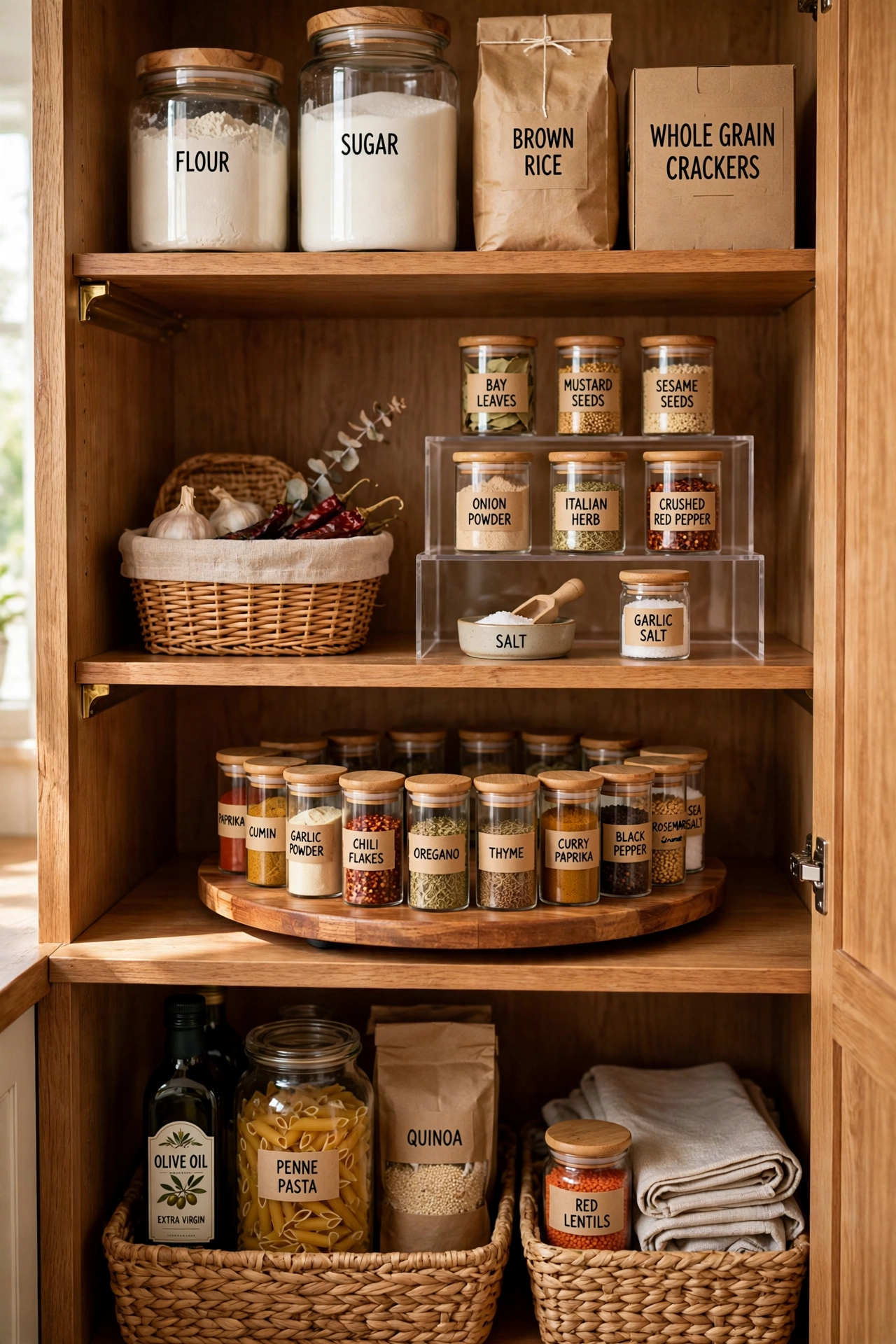
7. Use the door
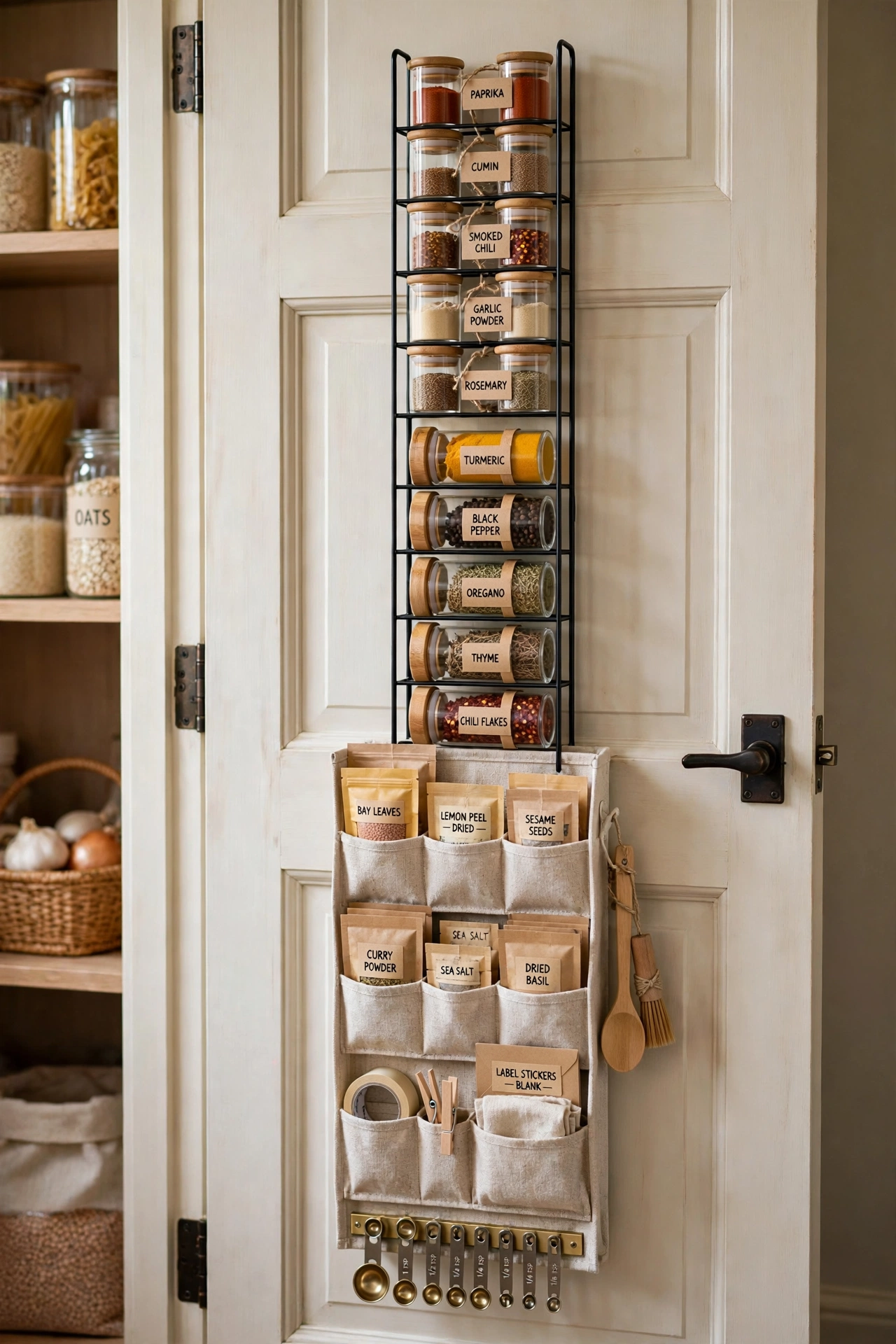
The inside of the pantry door is free storage. Hang a slim rack for spices, small jars or packets, and you gain a whole shelf without taking any shelf space. Over-door racks need no drilling and fit most doors. It is the most overlooked space in the kitchen, and one of the most useful.
8. Keep a running list
A small notepad or a whiteboard inside the pantry door, where anyone can write what has run out, ends the duplicate-buying problem. When you use the last of something, write it down. Shopping becomes a quick glance at the list instead of a guess, and the pantry stays stocked with what you actually cook with.
9. Put daily things at eye level
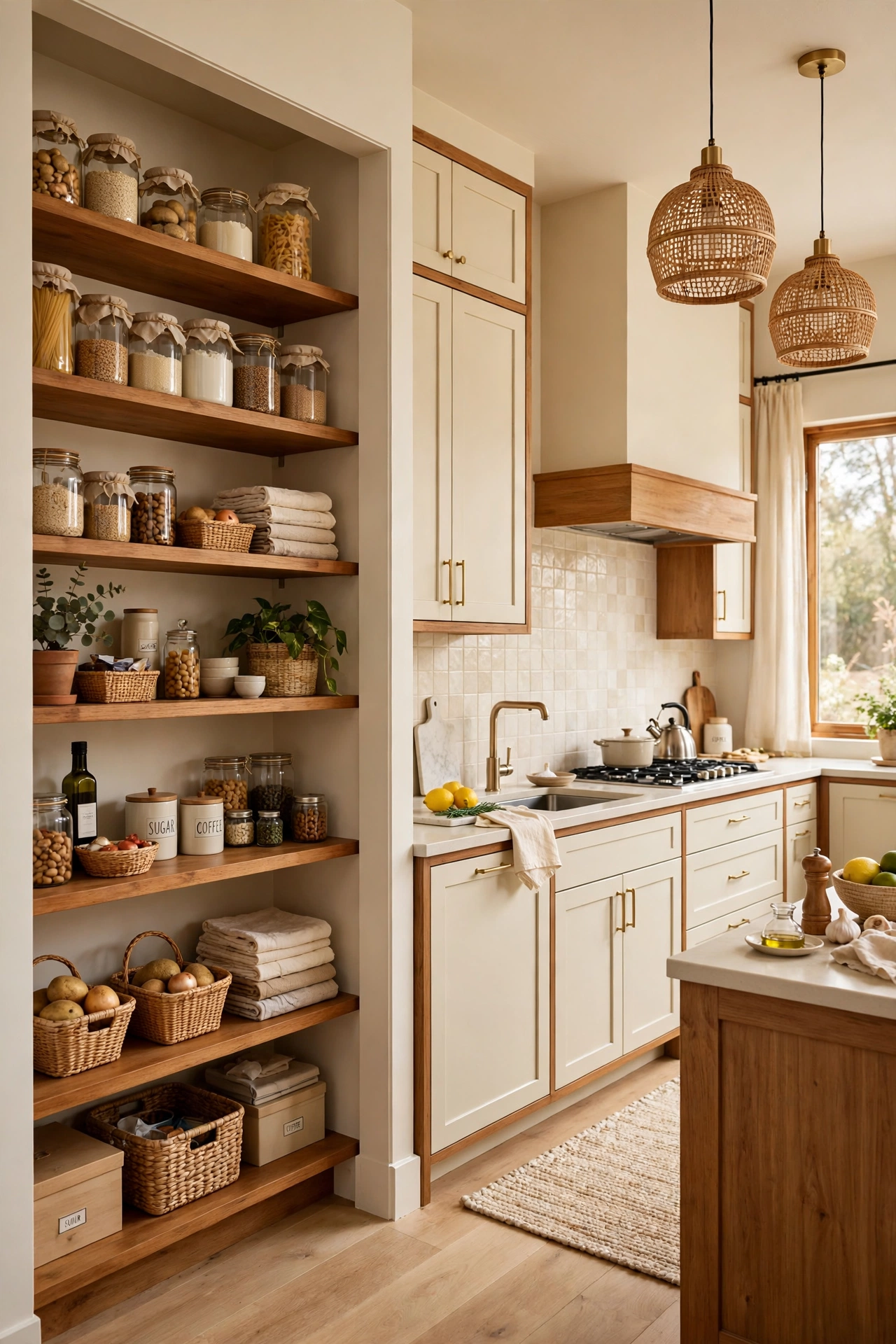
The things you reach for every morning — tea, coffee, breakfast cereals, the children’s snacks — belong at eye level, where you can grab them without thinking. Heavy things go low, where they are safe to lift. Rarely used things go high. When the daily things are easy, the whole kitchen feels easier.
10. Do a ten-minute reset every week
An organised pantry is not a one-time project; it is a ten-minute weekly habit. Once a week, pull out anything that has crept into the wrong zone, wipe a shelf, and check the list. Ten minutes keeps the system alive, and the pantry never slides back into chaos. The kitchen feels bigger because it is working with you, not against you.
Conclusion
A bigger-feeling kitchen starts with a pantry you can see into: empty it, zone it, jar it, label it, and give the door a job. No renovation, no new cupboards — just an afternoon of sorting and a ten-minute weekly reset. Cook in it once, and you will wonder why you waited so long.