
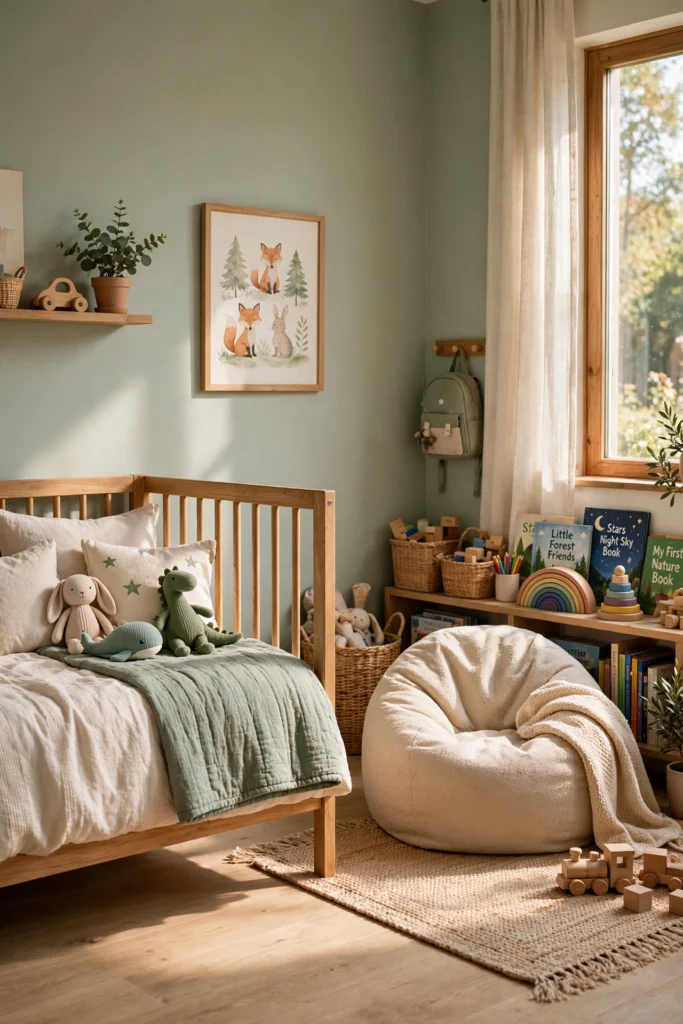
Children grow fast, and their rooms should keep up. A room designed only for a toddler feels wrong by age seven; a room designed for a teenager feels wrong for a five-year-old. The trick is to build the room around things that last — good furniture, calm walls, smart storage — and let the playful parts be the things that are easy to change.
These eleven ideas create a room that works now and still works in three years, without a full redecoration every birthday.
1. Choose furniture that lasts
Buy the bed, wardrobe and desk once, and buy them well. A simple wooden bed with a classic shape, a sturdy desk and a wardrobe with room to grow will serve a child from five to fifteen. Avoid beds shaped like cars or castles — they are outgrown in a year. Spend on the pieces that stay, and save on the pieces that change.
2. Keep the walls calm and changeable
Paint the walls a soft, neutral colour — warm white, pale sage, soft blue — and let the fun come from things you can swap. Wall decals, framed prints and a pinboard cost little and change in minutes. When your child’s favourite changes from dinosaurs to space, you change the art, not the paint.
3. Make storage they can actually reach
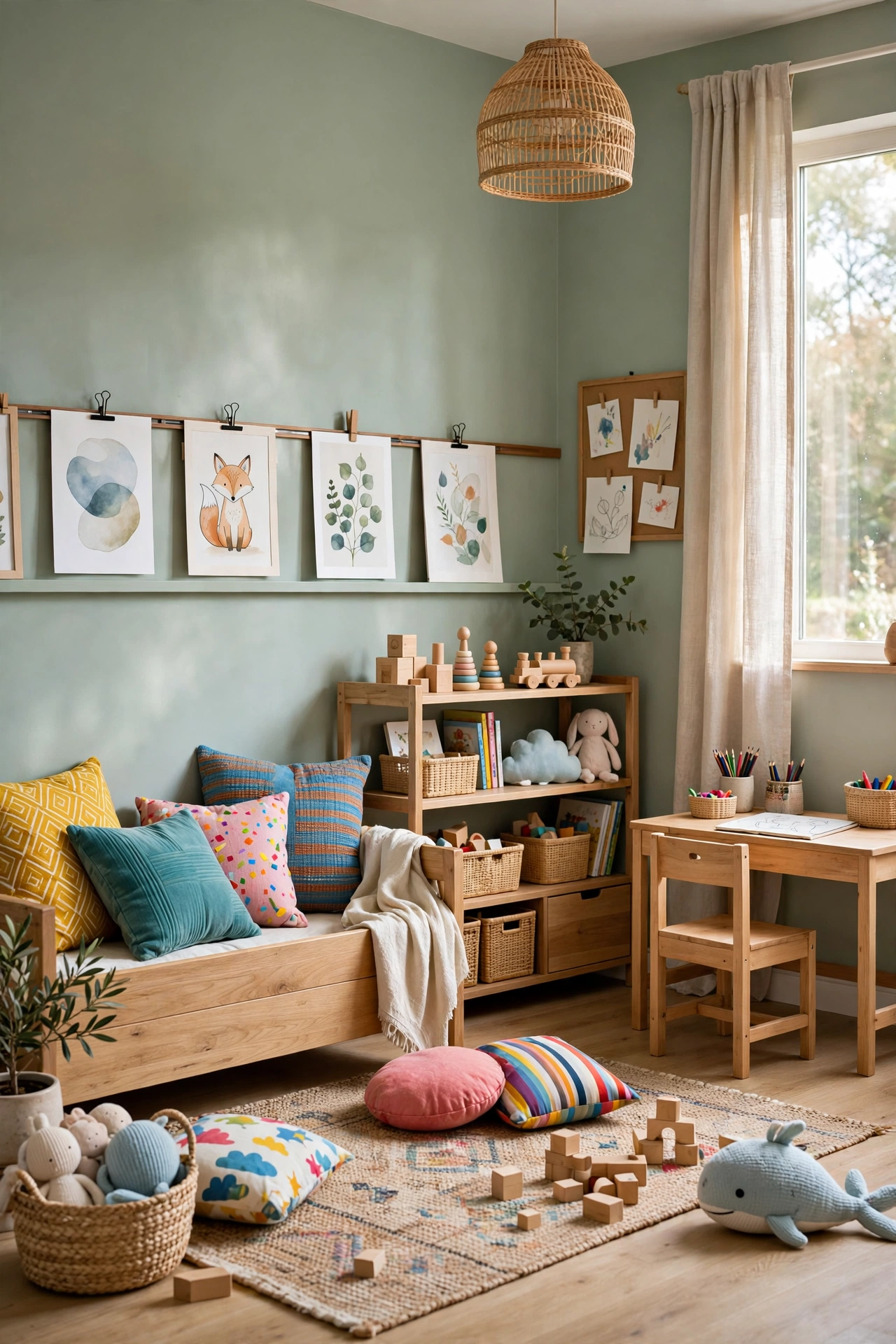
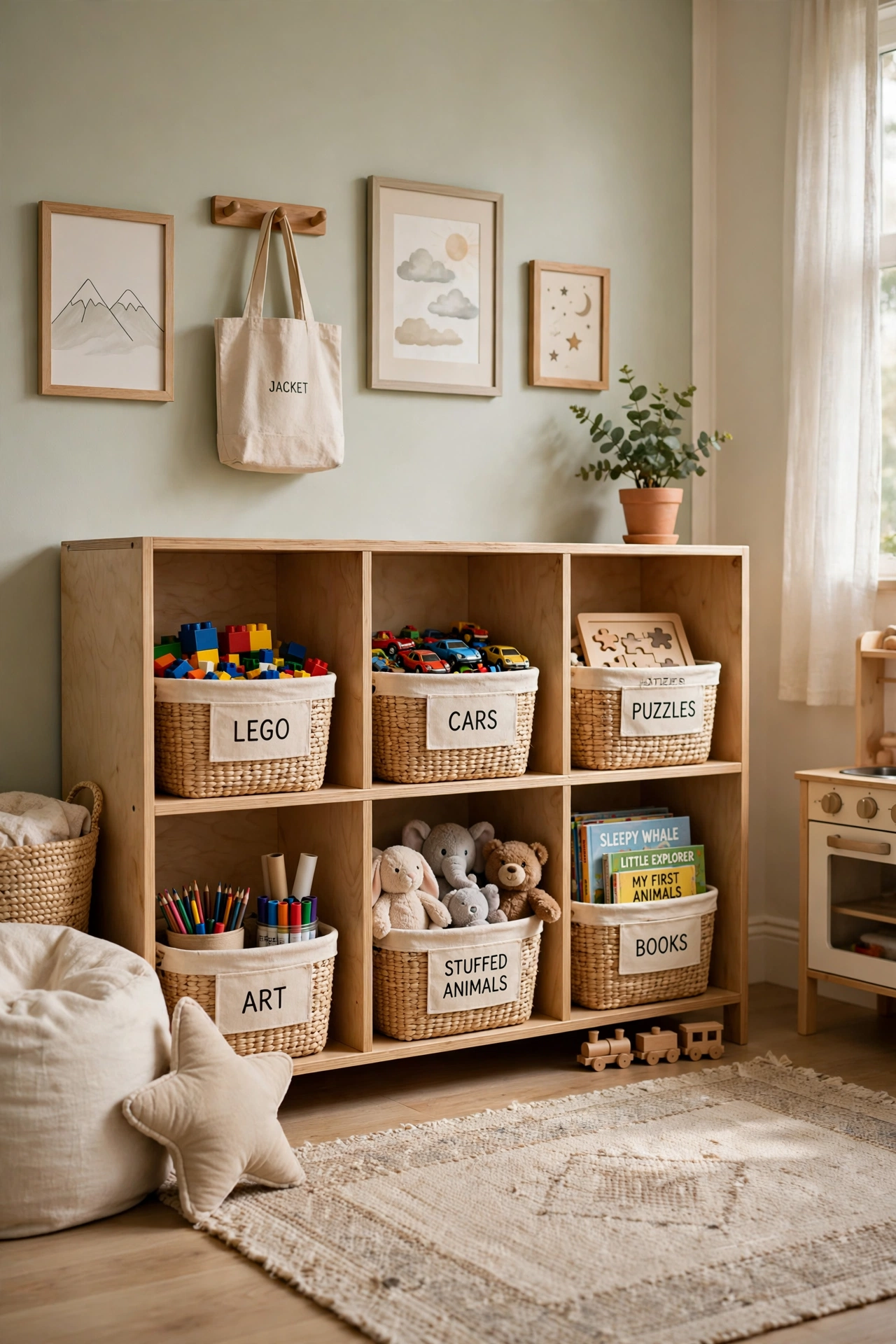
Storage only works if a child can use it. Low open shelves, baskets on the floor and labelled boxes at knee height mean toys get put away — mostly — without being asked. Put the everyday toys low and the special things high. A tidy room is not about having less; it is about everything having a place a child can reach.
4. Create a reading corner
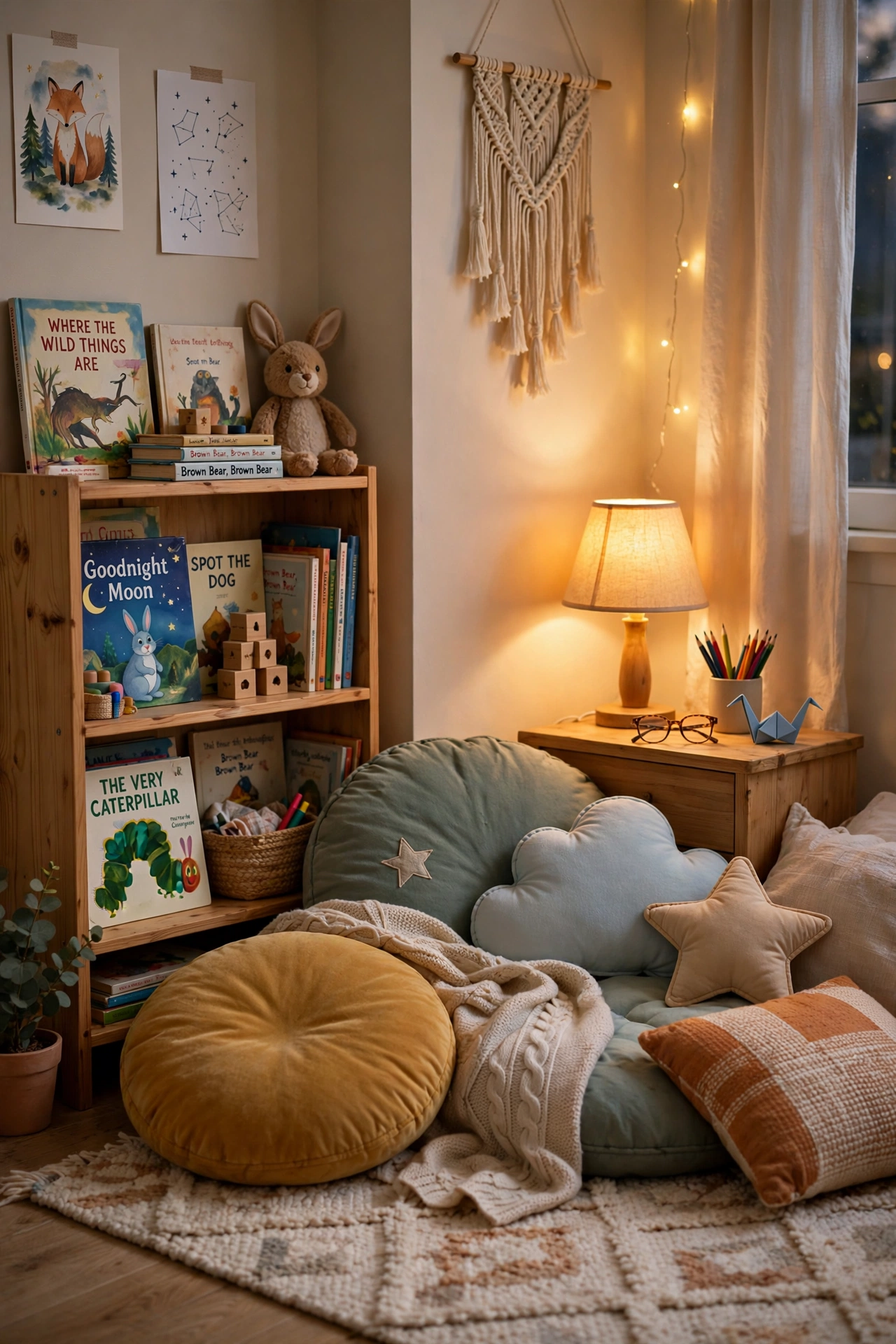
Every kids room deserves a small reading corner: a cushion or a bean bag, a low shelf of books, and a good light. It does not need much space — a corner by the window is enough. Children who have a cosy place to read will read there, and the corner becomes the calmest spot in the room.
5. Let them choose one thing
Let your child choose one thing in the room — the bedding, a poster, the colour of a cushion. When children help decide, they care about the room more, and they keep it tidier. One chosen thing gives them ownership without handing over the whole design.
6. Add a desk that grows
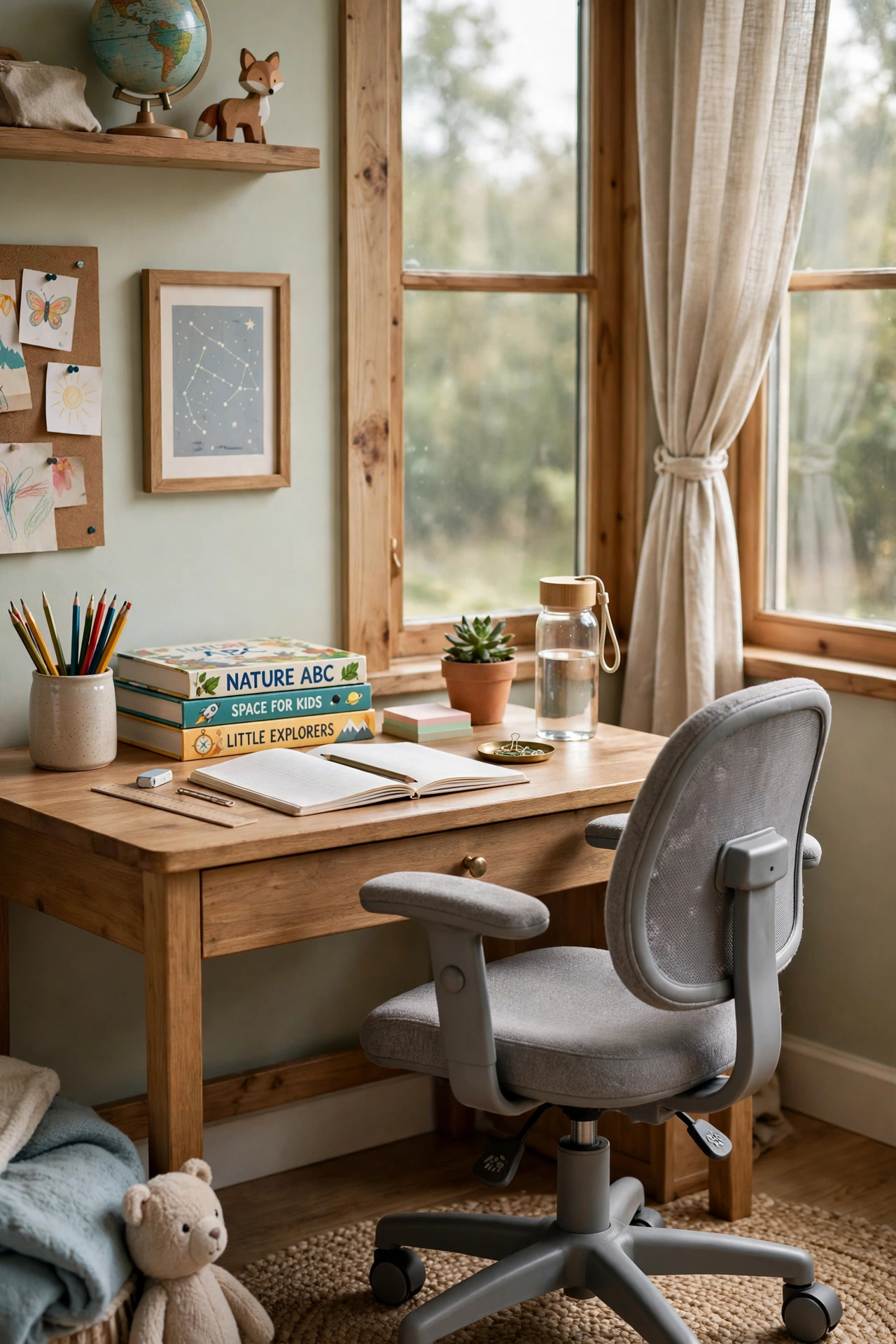
A desk at the right height matters once homework starts. Choose an adjustable desk, or a simple table with a chair that can be swapped as they grow. Keep the desk near a window for daylight, and give it one drawer or a small shelf for pencils and paper, so homework has a home and the kitchen table gets its evenings back.
7. Use soft lighting for bedtime
Harsh ceiling light is the enemy of bedtime. Add a warm bedside lamp, a small night light, or a string of soft fairy lights for the wind-down hour. Warm light tells a child’s body it is time to slow down, and a lamp they can switch on themselves gives them a little independence at night.
8. Display their art like a gallery
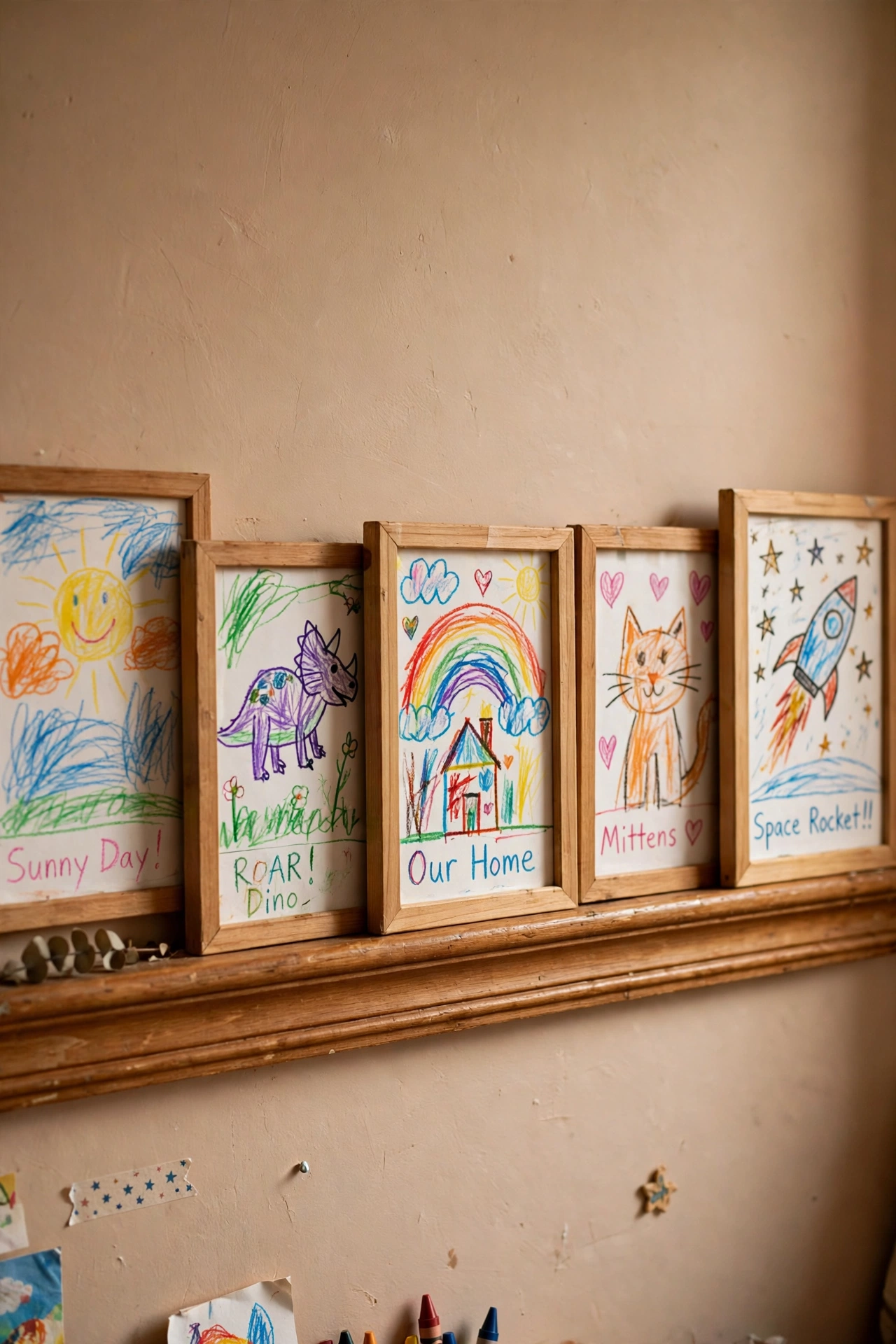
Children’s drawings deserve better than the fridge door. Hang a simple picture rail, a row of clip frames, or a washing line with pegs, and rotate the art every few weeks. It costs almost nothing, it makes children proud, and the room always has something new and personal on the walls.
9. Leave floor space for play
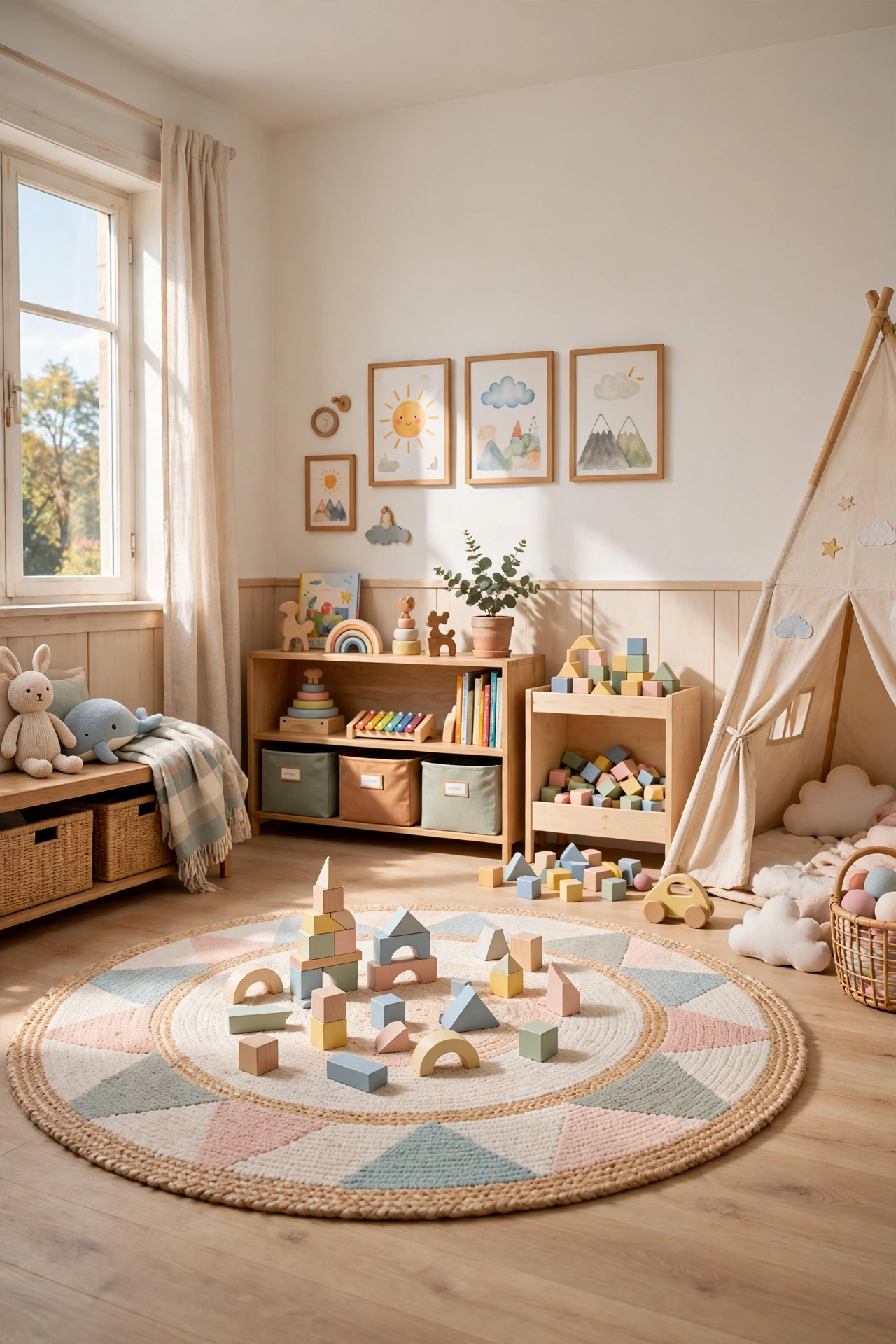
A kids room needs empty floor. Resist filling every corner with furniture — leave a clear patch of floor for building, drawing and imaginary games. A rug marks the play zone and softens the floor, and it can be rolled up or swapped as tastes change. The best toy in the room is often the space itself.
10. Add a growth chart they will love
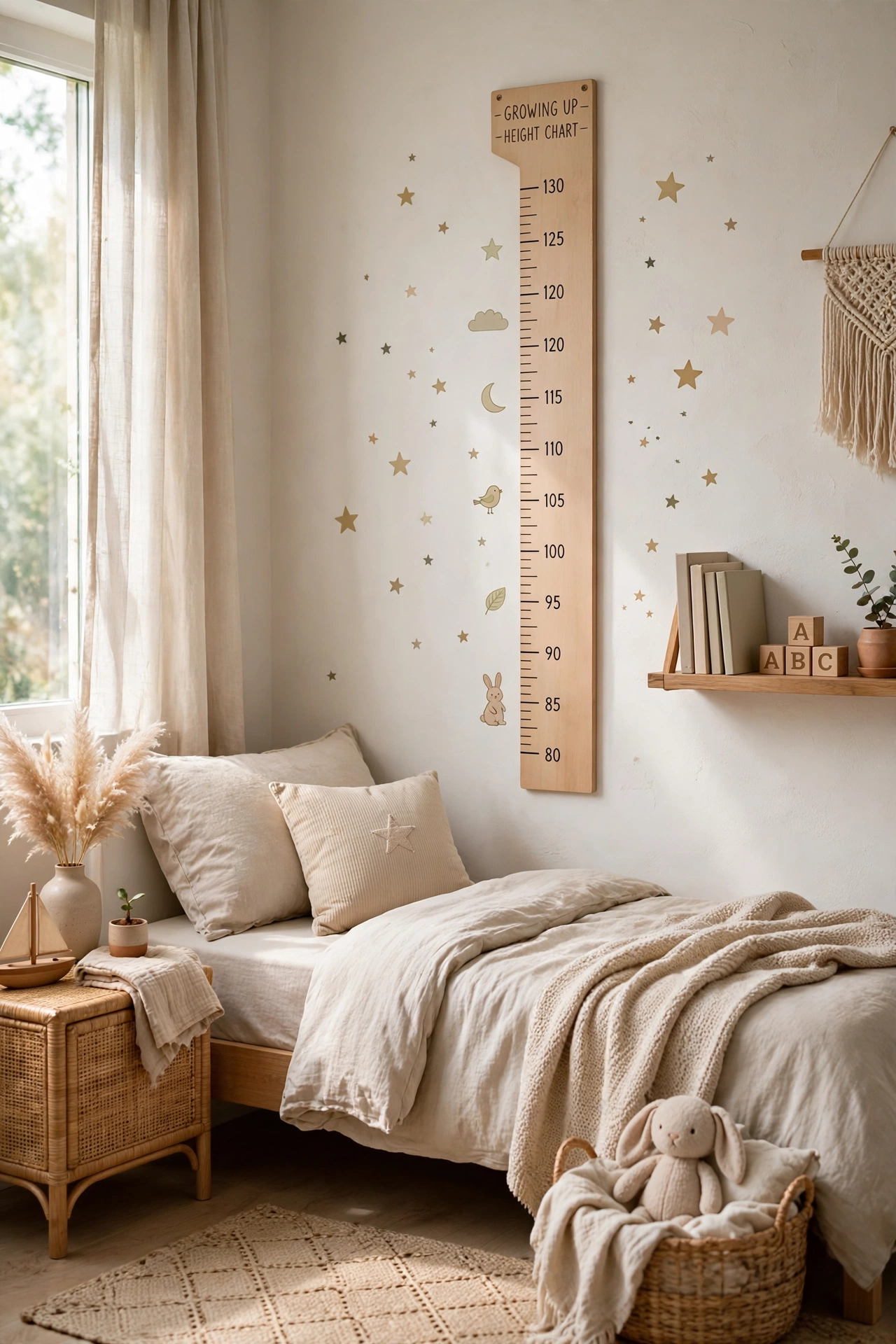
A wall growth chart — painted, wooden or a simple ruler decal — turns growing up into something to celebrate. Mark birthdays and milestones on it, and it becomes a keepsake in itself. It is one of the few decorations that gets more meaningful every year, not less.
11. Plan for the next stage now
When you buy a shelf, ask if it will still work when they are ten. When you choose a bed, ask if it fits a teenager. Thinking one stage ahead costs nothing and saves a full redecoration later. A room that grows with a child is not a room that never changes — it is a room that changes in small, easy steps.
Conclusion
A kids room that grows with them is built on lasting furniture, calm walls and reachable storage, with the fun kept in the swappable parts. Let your child choose one thing, leave room to play, and change the art as they change. The room will grow up with them — and you will only have to redecorate the easy bits.