
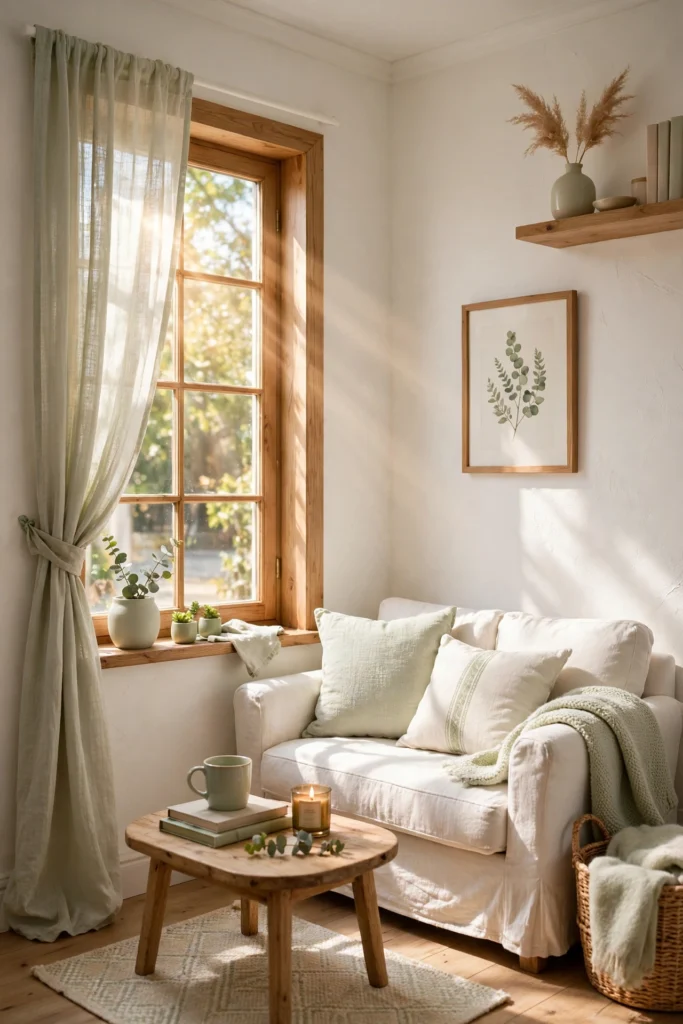
Small rooms get a bad reputation. But some of the most beautiful, cozy homes in the world are tiny — because small spaces force you to be intentional about every single choice. When everything in a room earns its place, the room feels calm, curated, and surprisingly spacious.
You don’t need to knock down walls. These nine ideas make a tiny room feel bigger, brighter, and more beautiful — starting today.
1. Paint it light and bright
Dark walls can be dramatic, but in a small room they close the space in. Light colors — warm white, pale sage, soft beige — bounce light around and make walls feel farther apart. If you love color, keep the walls light and bring color in through cushions, art, and throws. One light, airy base color is the single biggest difference-maker in a small room.
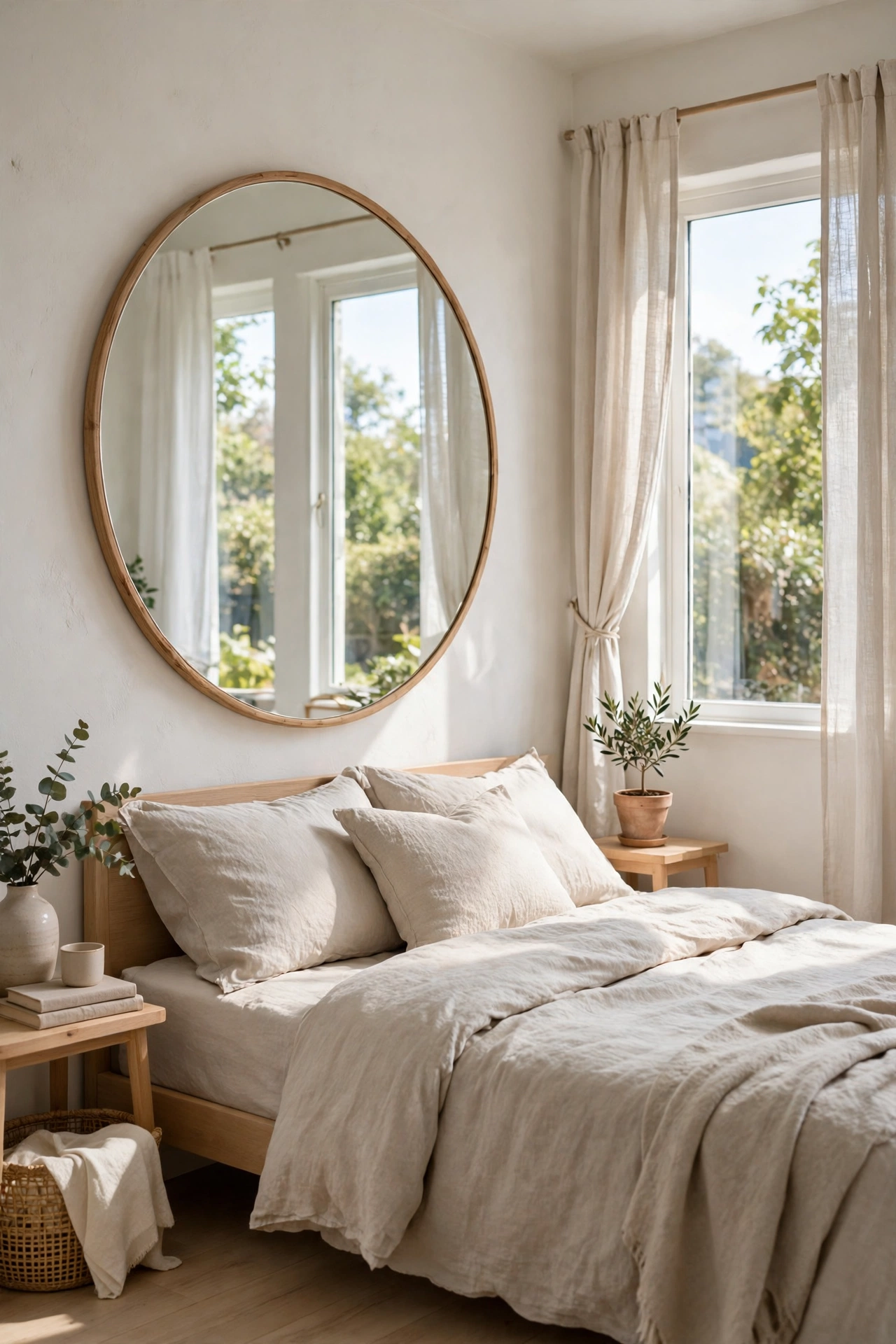
2. Hang a big mirror
A large mirror is the oldest small-space trick for a reason: it doubles the light and the sense of space. Hang one large mirror opposite a window so it reflects daylight, or lean a full-length mirror against the wall in a bedroom. Choose a simple frame — or no frame at all — so the mirror itself disappears and only the light remains.
3. Choose furniture that does double duty
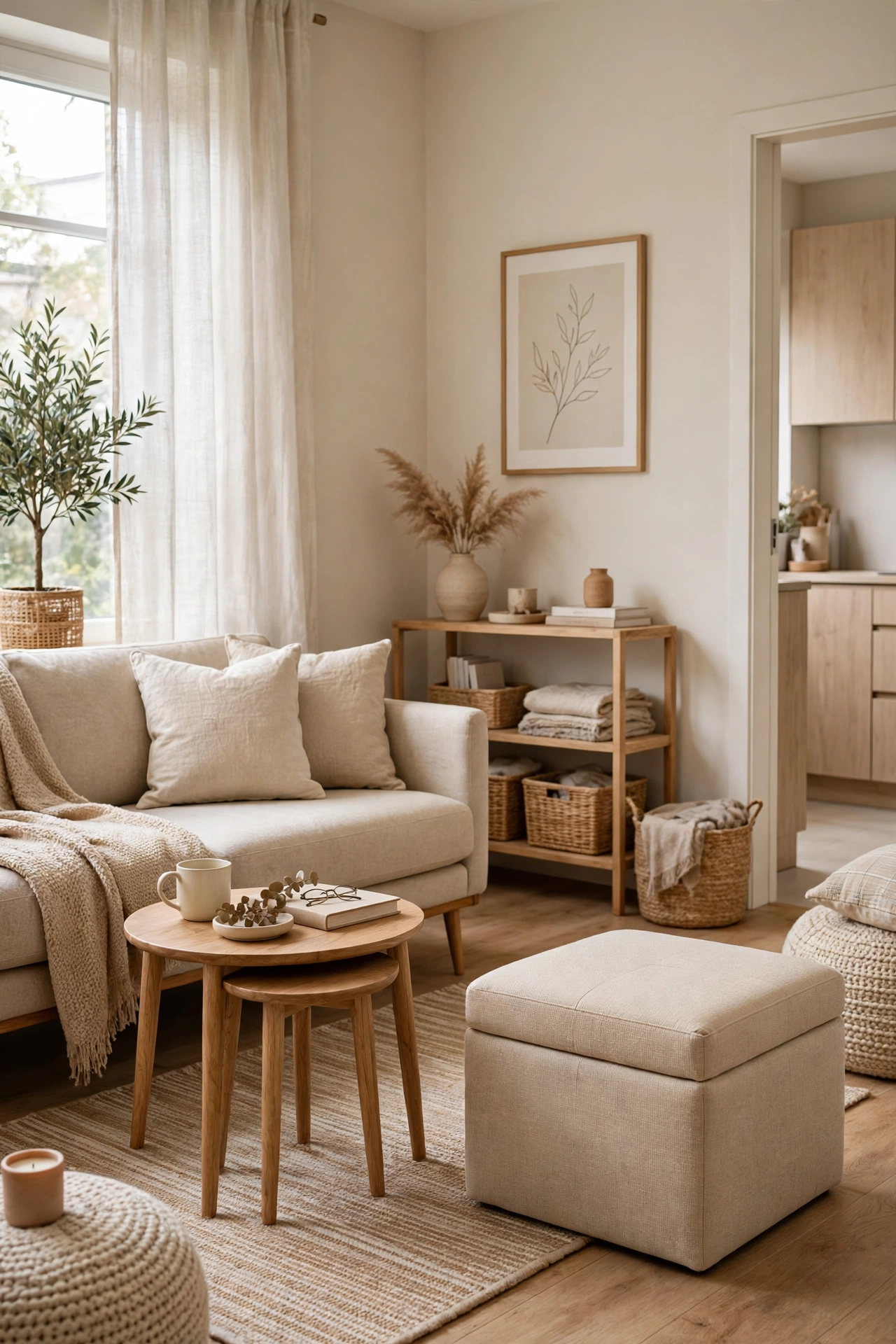
In a small room, every piece should work twice as hard. An ottoman that stores blankets inside. A coffee table with a shelf underneath. A bed with drawers below. A desk that folds away when you’re done. Multi-purpose furniture means fewer pieces in the room, and fewer pieces means more space to breathe.
4. Go vertical with storage
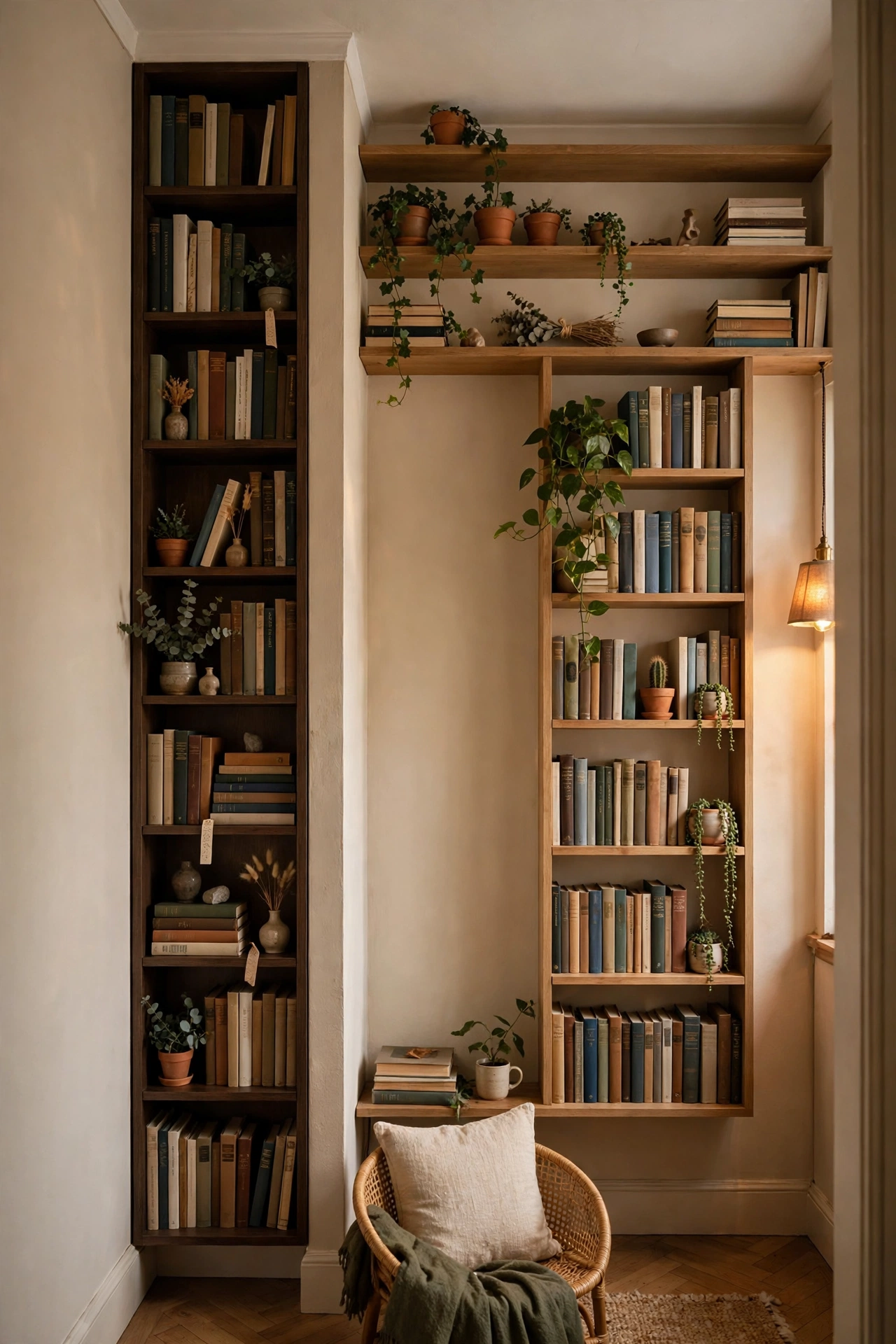
When floor space is limited, look up. Tall, narrow bookshelves, floating shelves near the ceiling, and hooks on the back of doors use wall space that would otherwise go to waste. Keep the top shelves for things you rarely use and everyday items at eye level. Vertical storage draws the eye upward — and a room that feels tall feels big.
5. Let furniture show its legs
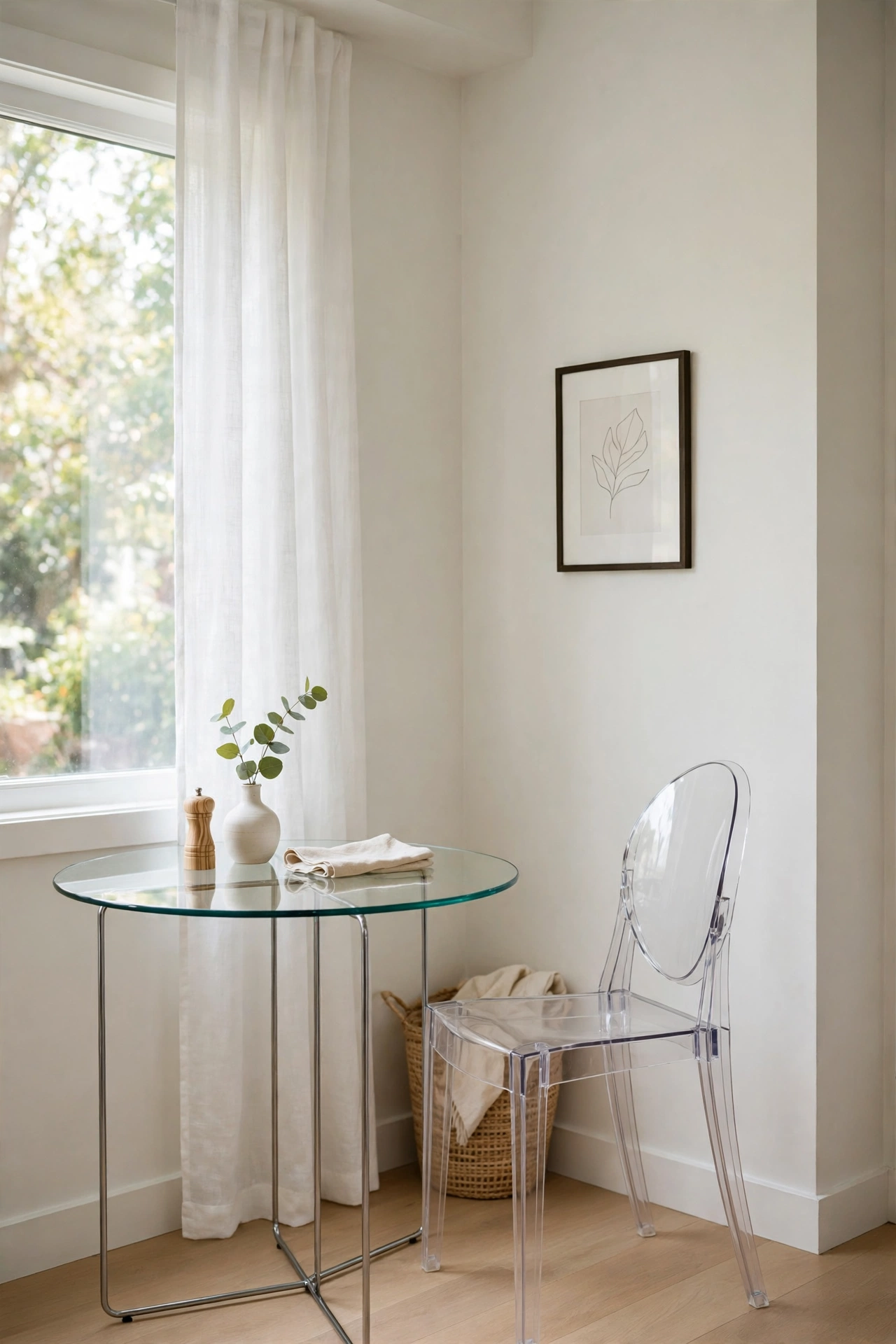
Bulky furniture that sits flat on the floor makes a room feel crowded. Pieces with slim, visible legs — a sofa, an armchair, a side table — let you see the floor underneath, and that glimpse of floor tricks your brain into thinking the room is larger. The same goes for glass or acrylic pieces: a clear coffee table or chair barely registers visually, so the room stays open.
6. Pick one statement piece
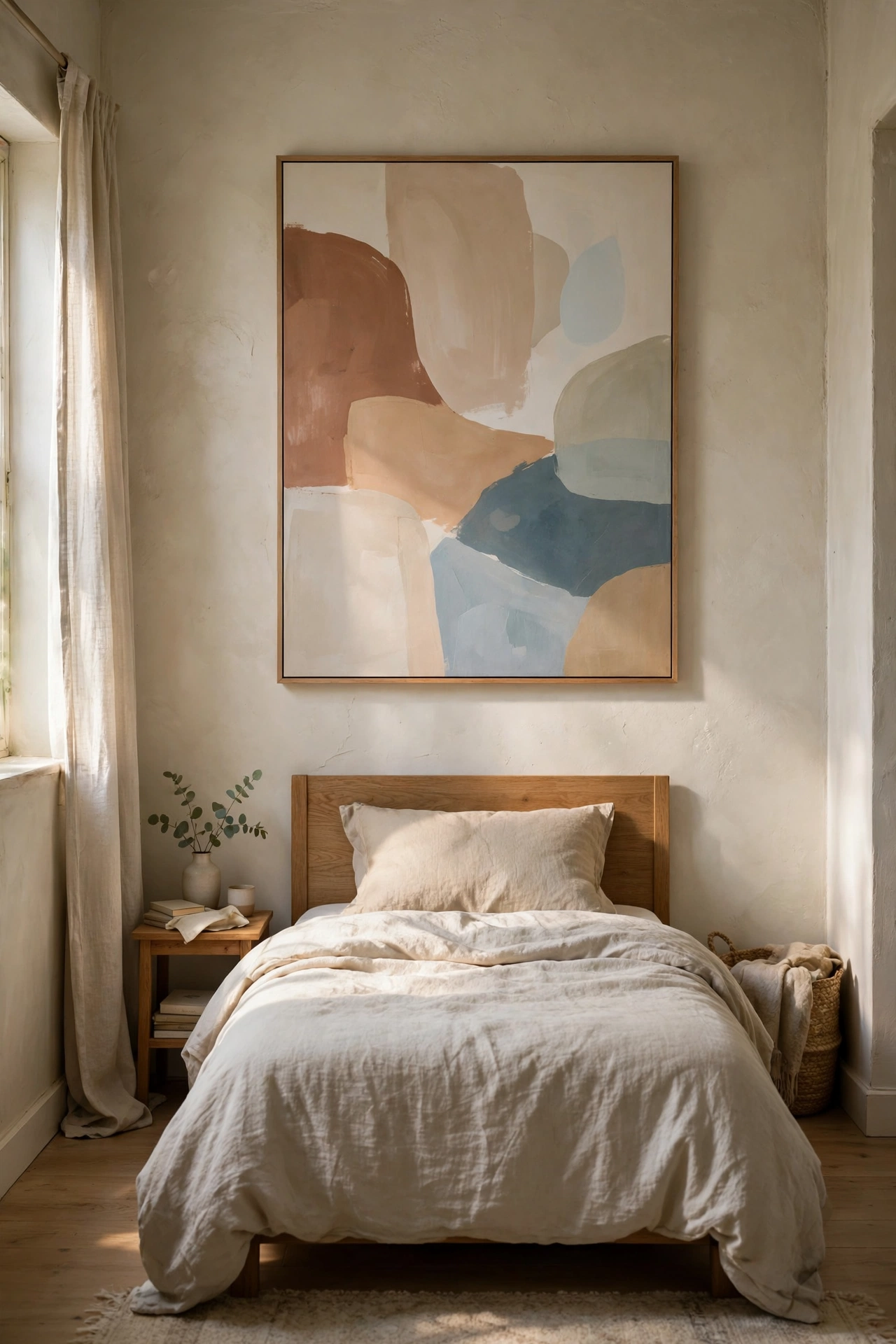
A small room full of small decorations looks cluttered. Instead, choose one larger statement piece — a bold piece of art, a beautiful lamp, one gorgeous chair — and let everything else stay quiet. One focal point gives the eye somewhere to rest and makes the room feel designed rather than crowded.
7. Hang curtains high and wide
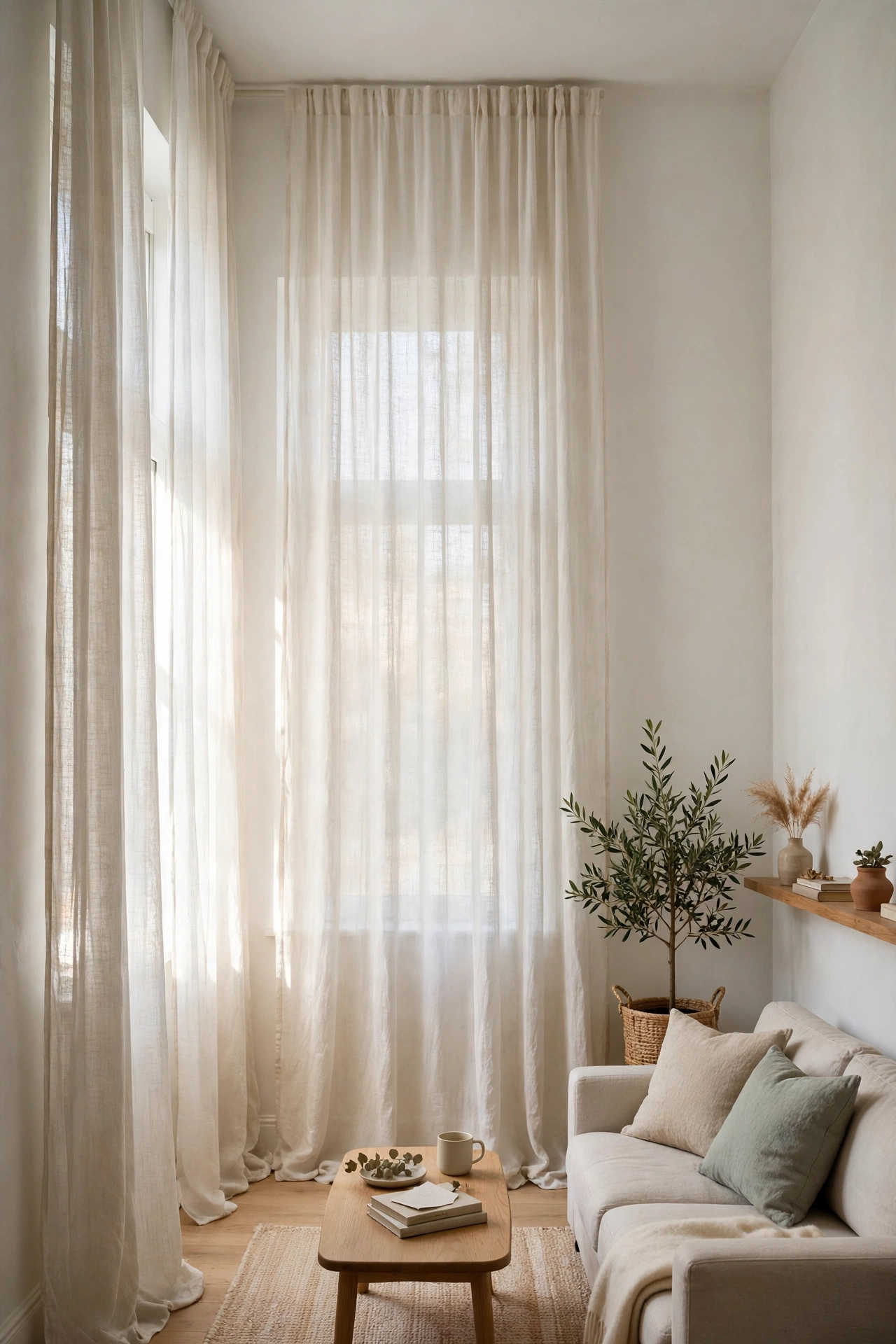
Just like in a living room, hanging curtains close to the ceiling and wider than the window makes the window — and the whole room — feel bigger. Use light, sheer fabric so daylight flows through, and let the curtains fall to the floor. Tiny windows are often the reason a small room feels dark; this trick fixes that.
8. Hide the clutter
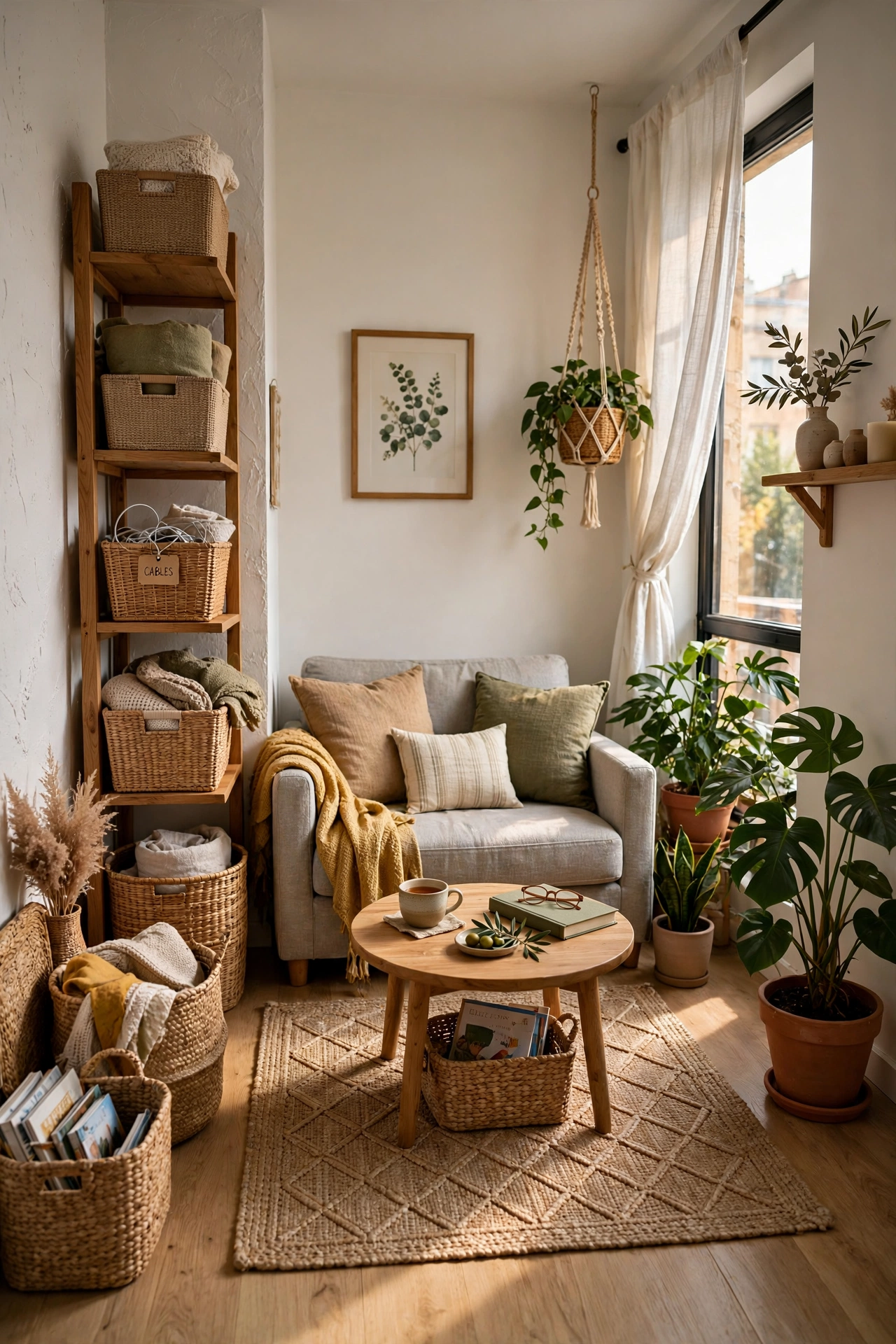
Clutter is the enemy of small spaces. Every visible pile makes a room feel smaller. Give everything a home: baskets under the bed, boxes on shelves, a tray on the table that corrals the small stuff. When surfaces are clear, a small room feels calm and spacious. The rule is simple: if you can see the floor and the surfaces, the room feels twice as big.
9. Keep the floor visible
The more floor you can see, the bigger a room feels. That means no piles of shoes by the door, no stacks of magazines on the floor, and furniture pushed just slightly away from the walls. A small rug that leaves a border of floor showing actually makes the room look larger than wall-to-wall carpet ever will. Space is a luxury — show it off.
Conclusion: Small rooms aren’t a problem to solve — they’re an invitation to decorate with intention. Light colors, mirrors, smart storage, and clear surfaces can make the tiniest room feel open and beautiful. Start with one idea this weekend, and watch your small space start to feel like so much more.